Álamos: Then and Now
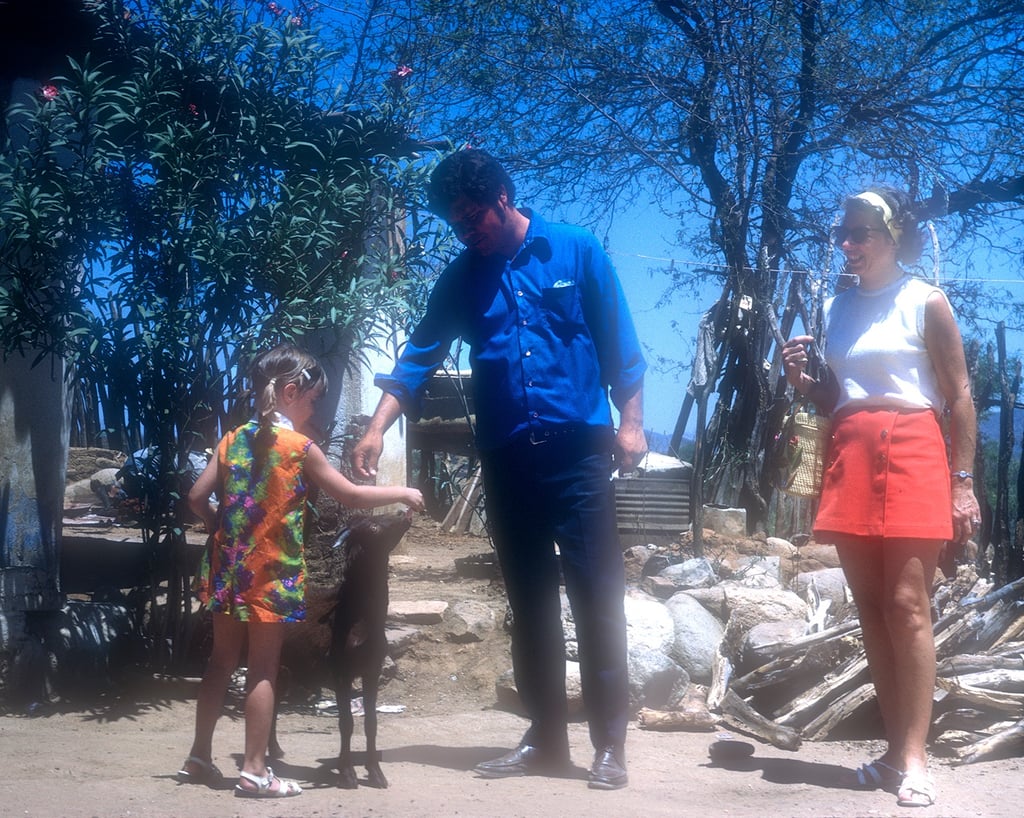
Warren and Barbara DeGar of Phoenix, with their young daughter, Diane, visited Álamos in July, 1971, on a vacation to Mexico. Both Barbara and Warren have now passed away, but in 2012 Barbara–-searching through old files—stumbled onto the slides from their trip and gave several of them to the Álamos History Association.
In the picture at right Barbara watches as tour guide Trini Hurtado (better known as Candy Joe) helps Diane feed a goat on an excursion to Uvalama. Trini was an English-speaking tour guide for more than 40 years, passing away in 2013.
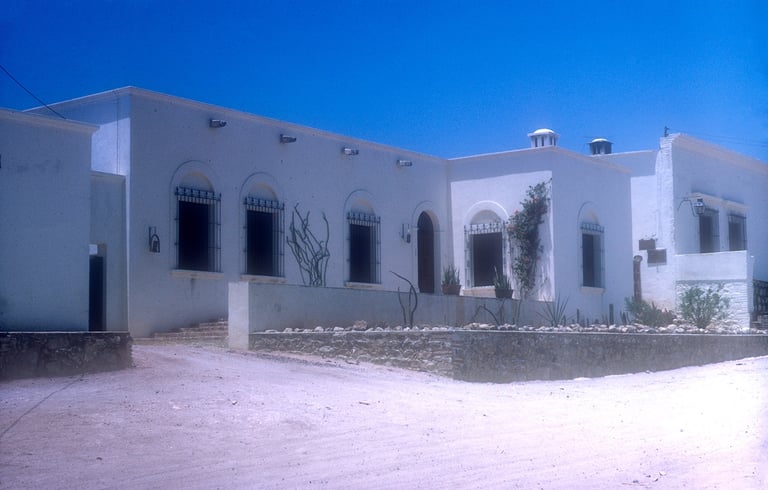
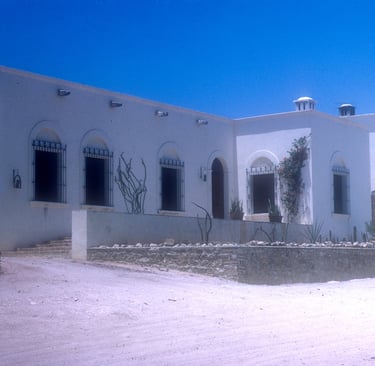
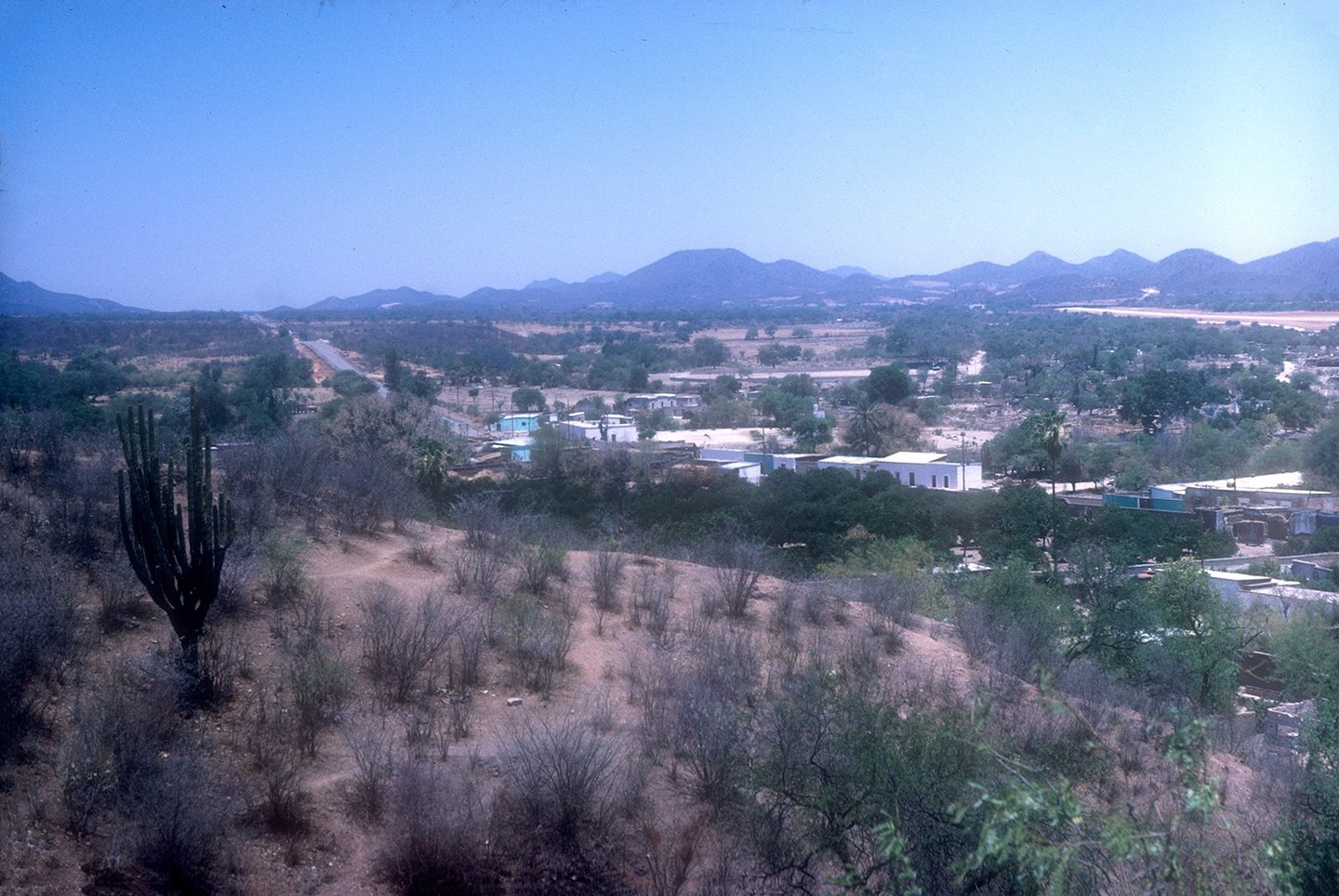
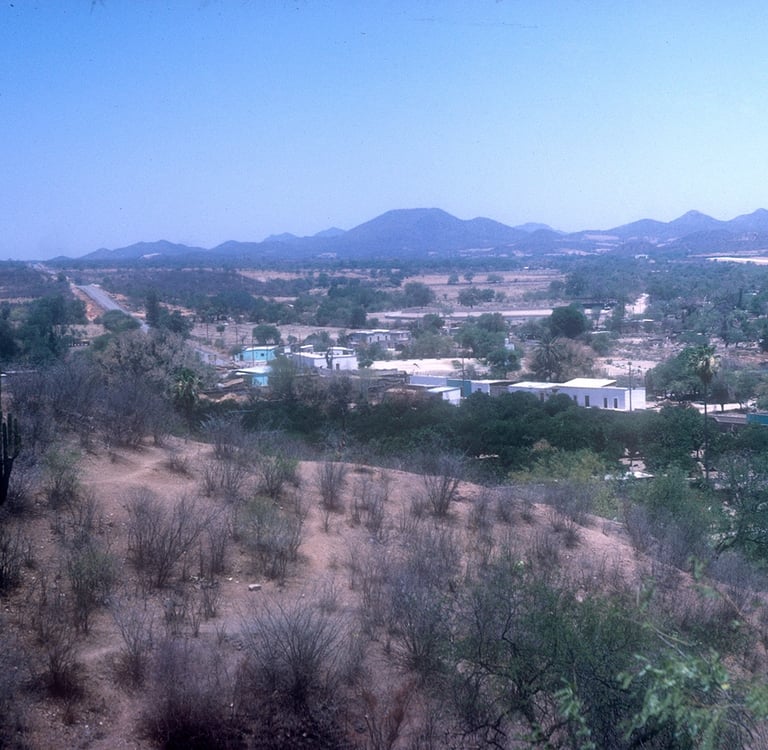
As in any "then and now" project the past is fixed—but the "now" continues to change. Álamos has changed since 2012, but the images below provide a meaningful glimpse into how it was and how it is. Pictures on the left are from 1971, while pictures on the right were taken in 2012.
In the early 1970s Álamos was becoming a popular tourist destination for North Americans, with a growing number of shops and hotels catering to Engflish-speaking visitors.
________________________
________________________
DeGar family trip to Álamos, 1971
________________________
________________________
________________________
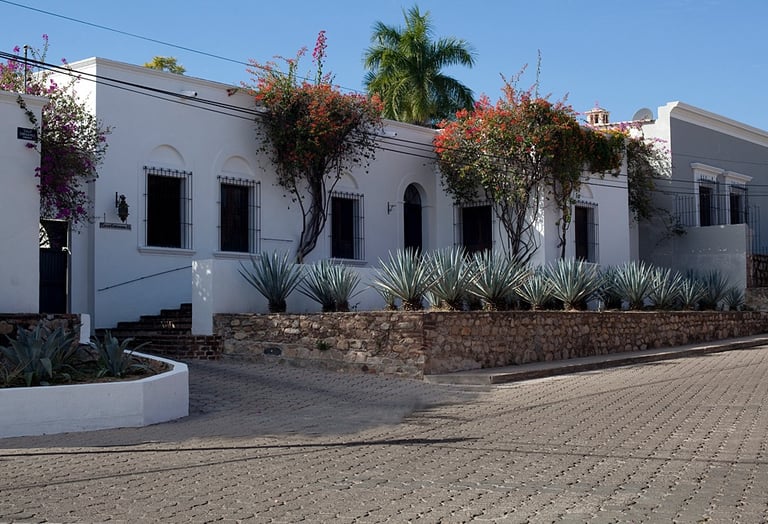
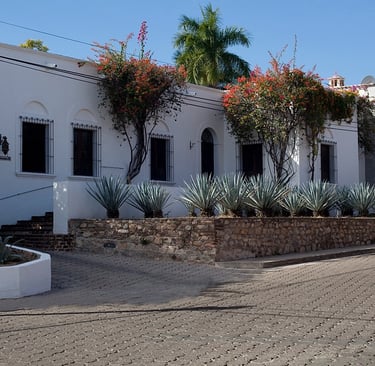
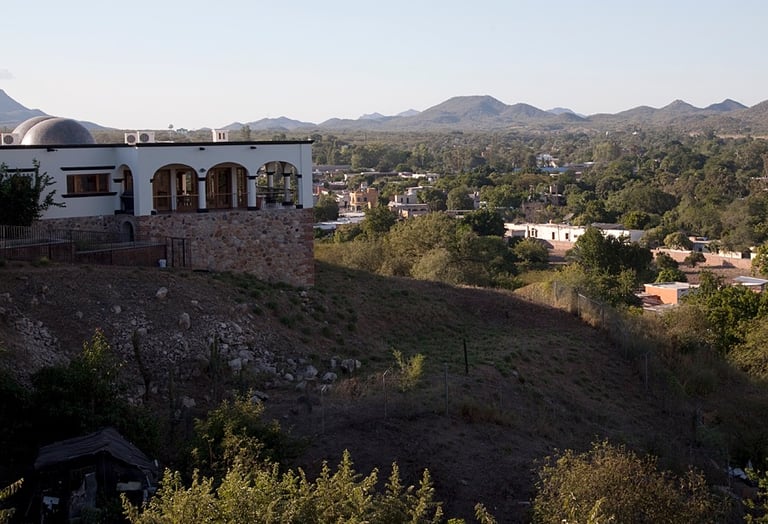
The award-winning actress Mary Astor bought this house in the late 1960s and lived in Álamos for nearly a decade. She wrote and completed a book on her life during her stay here, then moved to Los Angeles where she passed away in 1987 at the age of 81.
These two pictures were taken on Guadalupe hill in front of the Casa de la Cultura, which was then the Álamos jail. In the 1971 picture the road to Navojoa is visible for miles, but in the 2012 picture a recently-constructed house blocks the view.
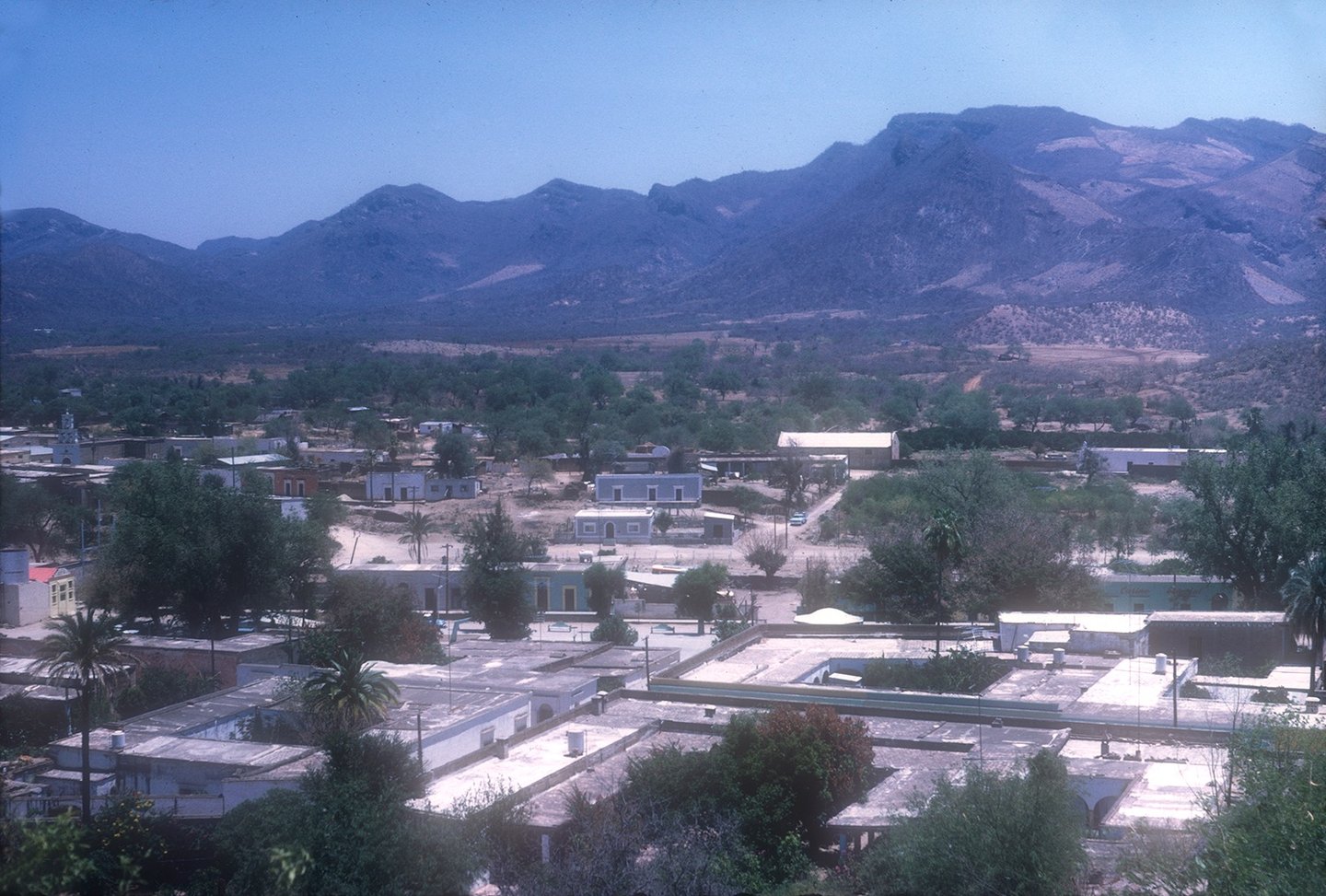
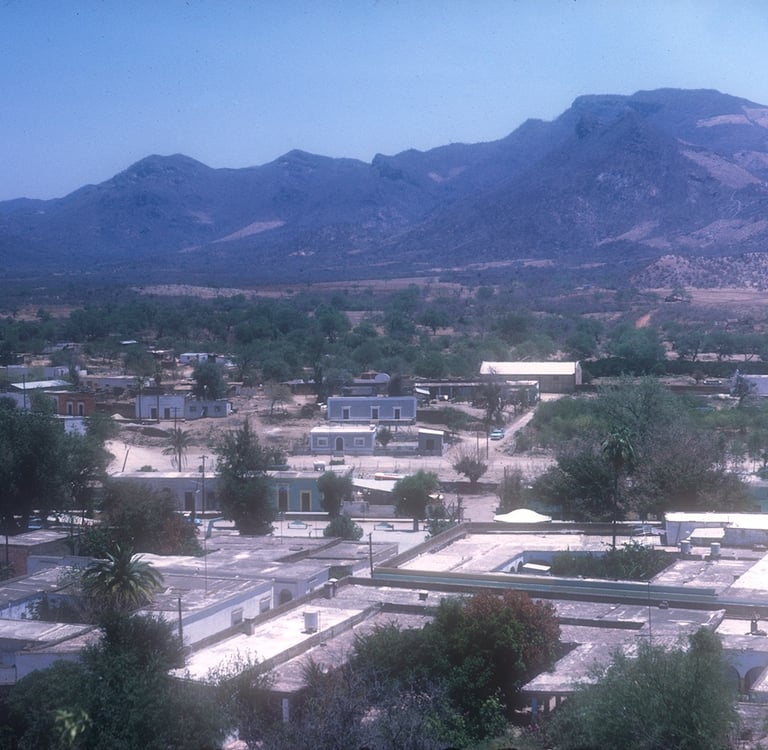
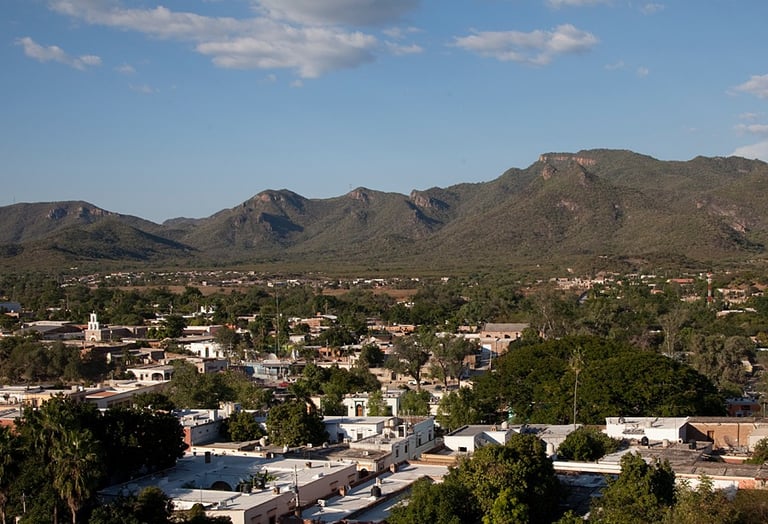
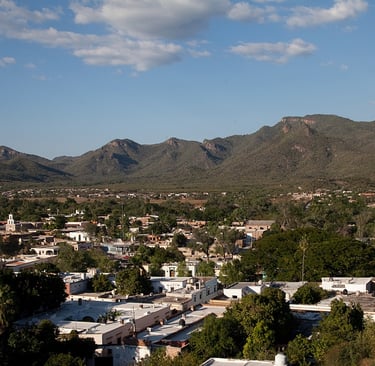
Also, taken north of the Casa de aa Cultura, these two pictures both include La Capilla on Hidalgo Street, with the chapel tower to the extreme left of the 1971 picture. The 2012 picture shows the growth of the town north of the arroyo.
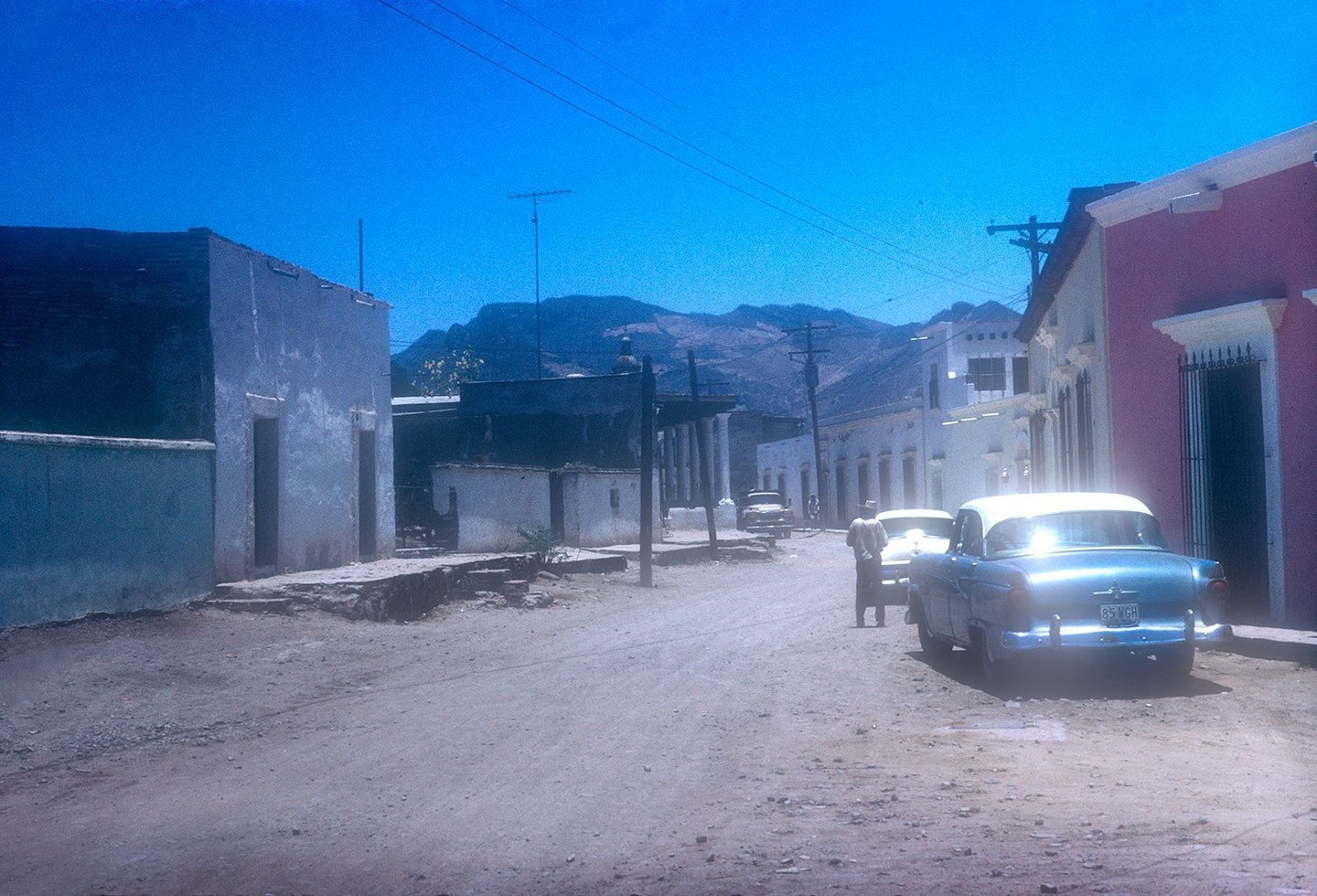
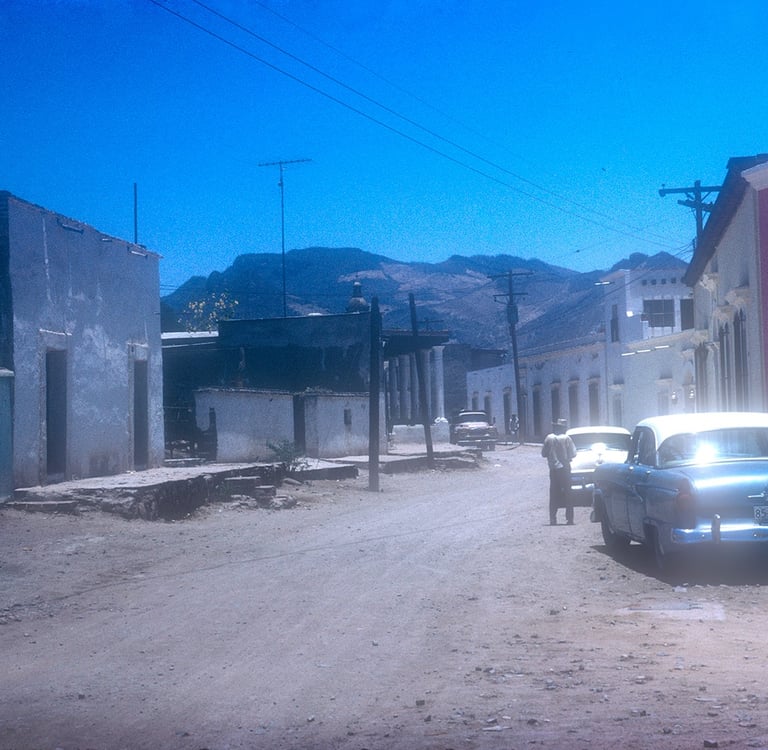
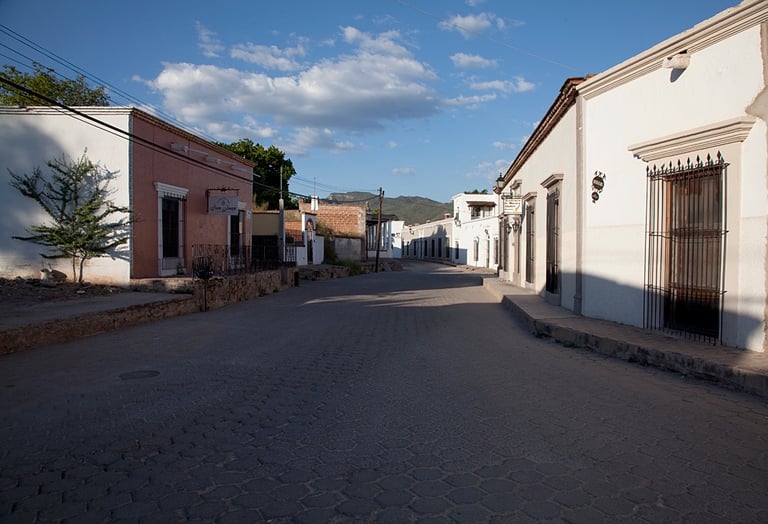
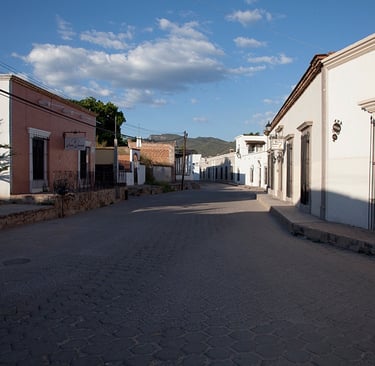
The 1971 picture at left shows dust and disrepair at the point where Juárez Street meets la Calle Mina, while the 2012 picture shows freshly painted buildings and smooth pavement. If only that 1950s Oldsmobile were still parked along the street!
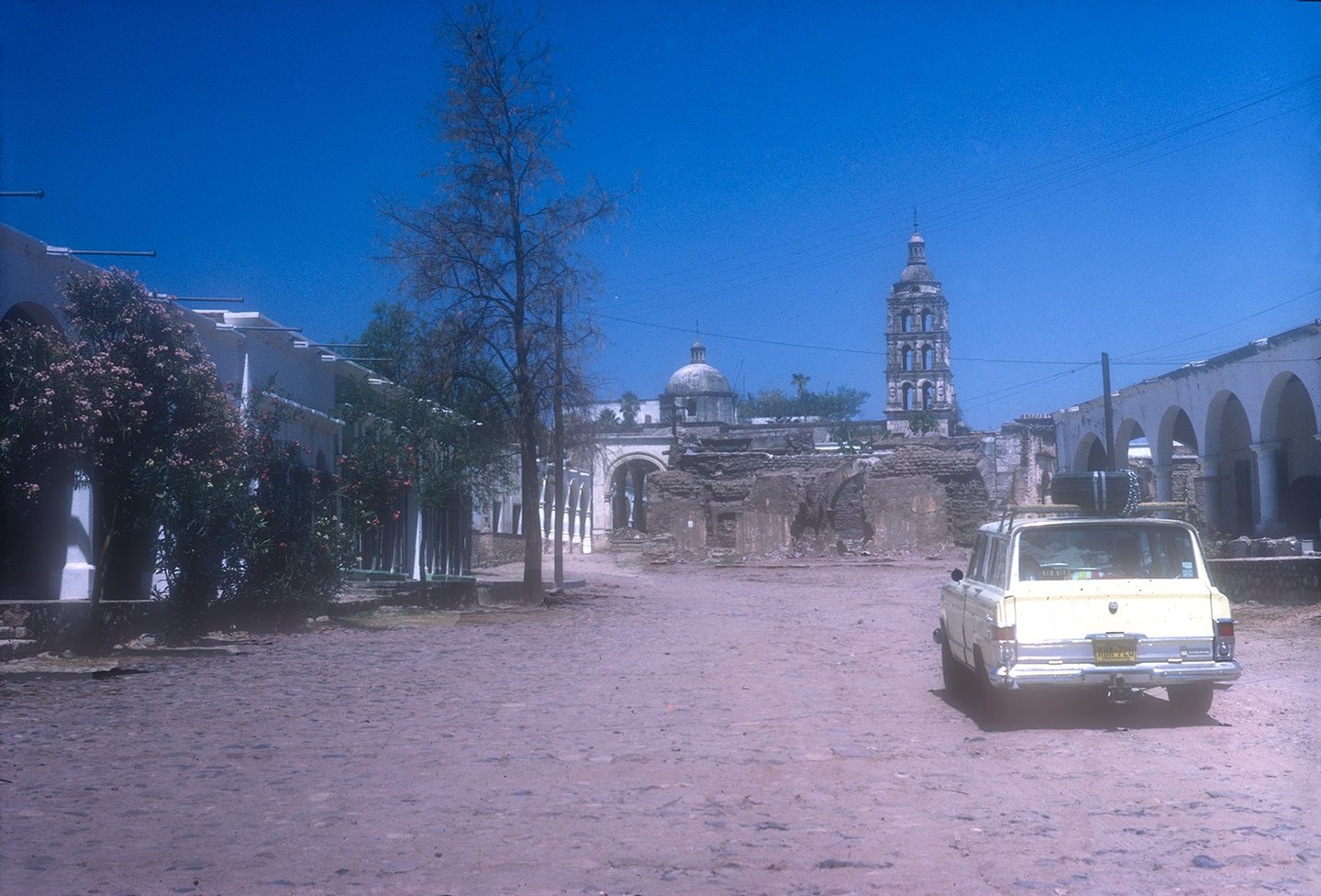
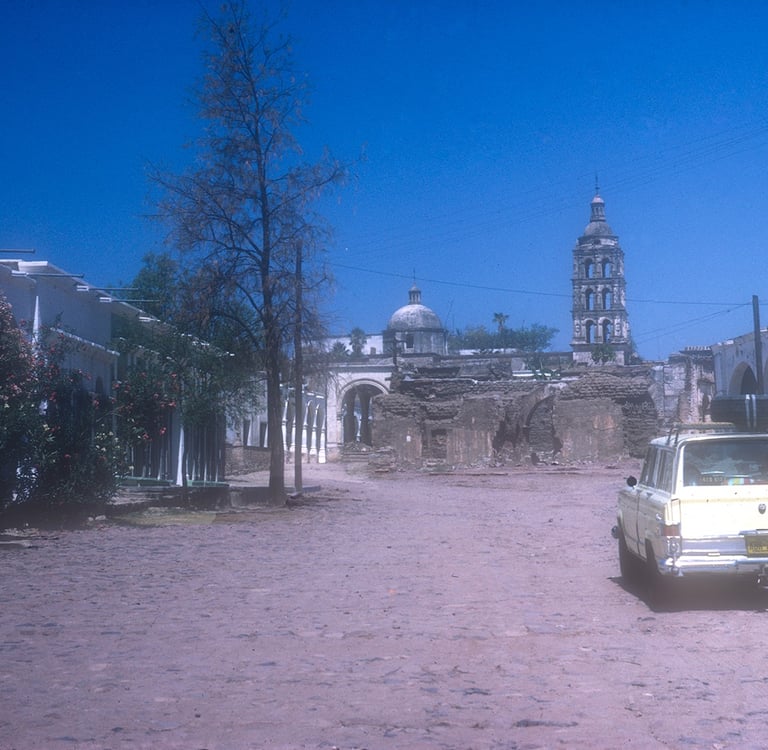
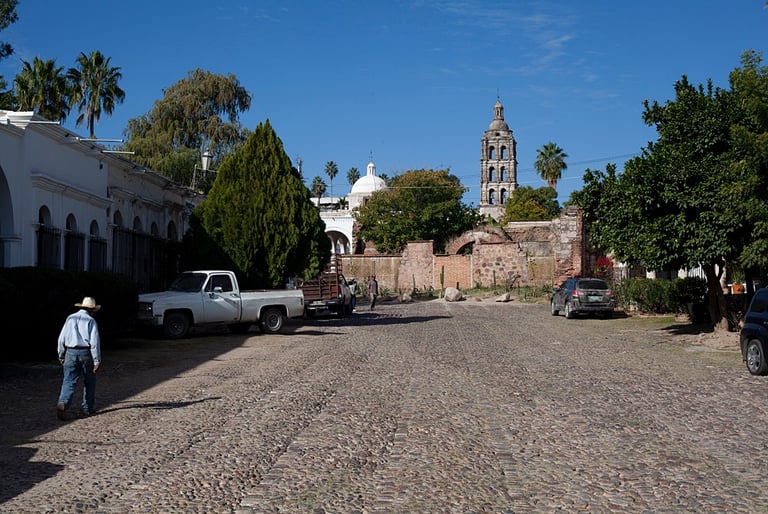
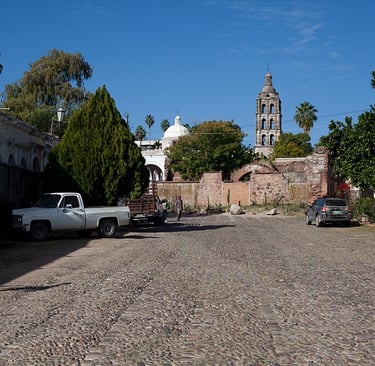
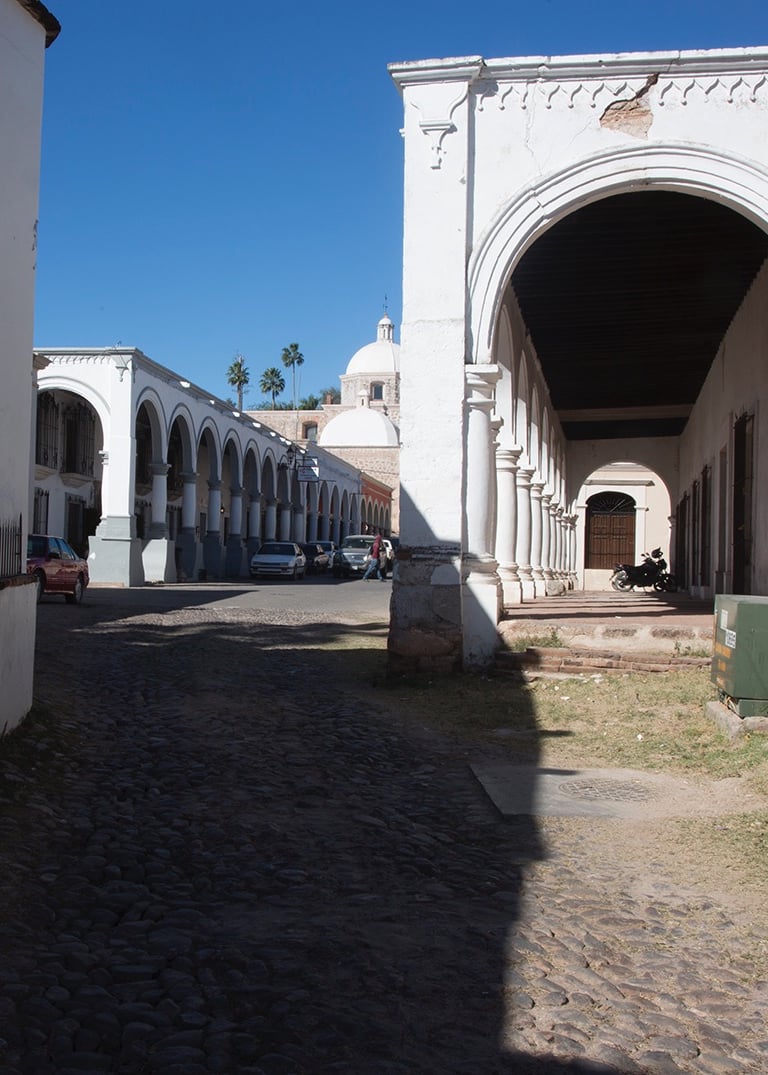
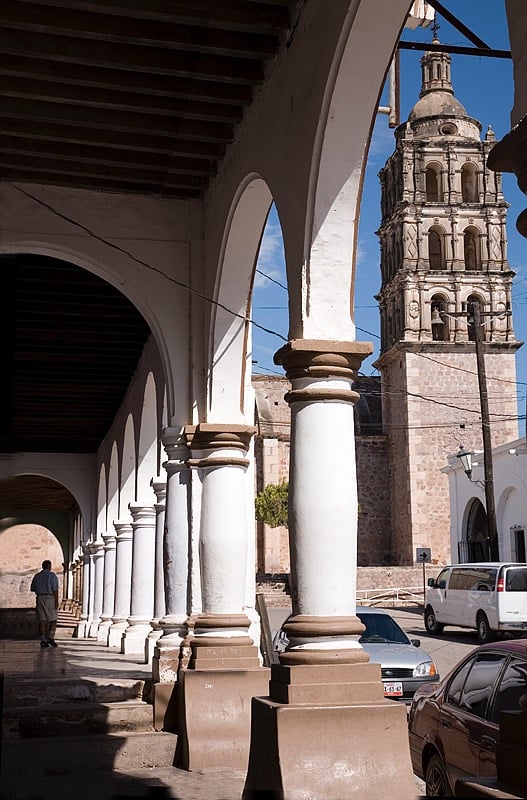
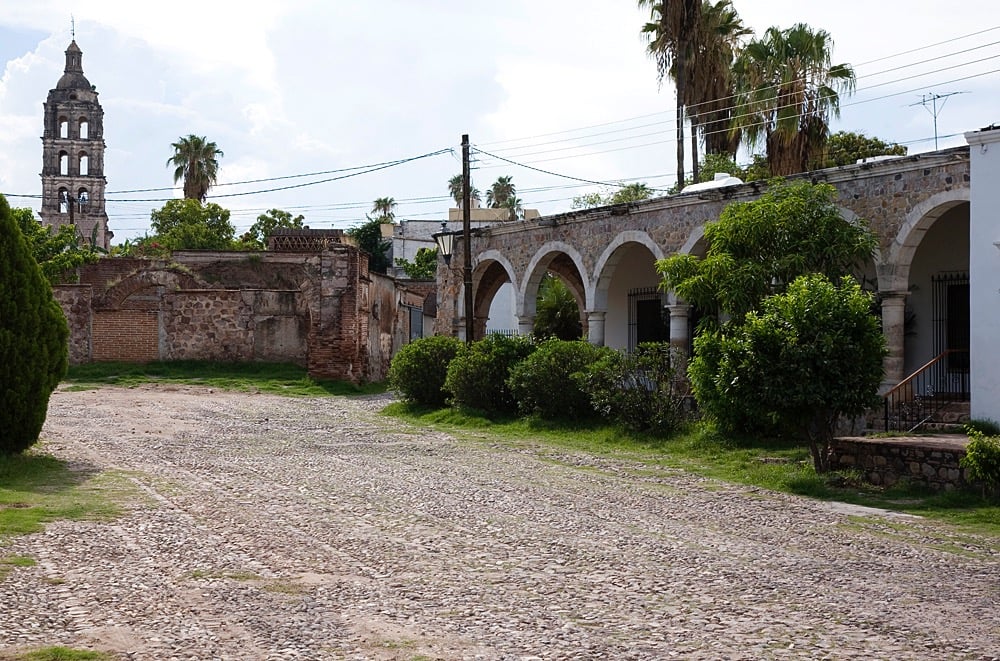
The cobblestone on Comercio Street has not changed since 1971, although the shrubbery on the right side of the street now covers the building façade. The church and the ruins of the governor's palace are visible in both images.
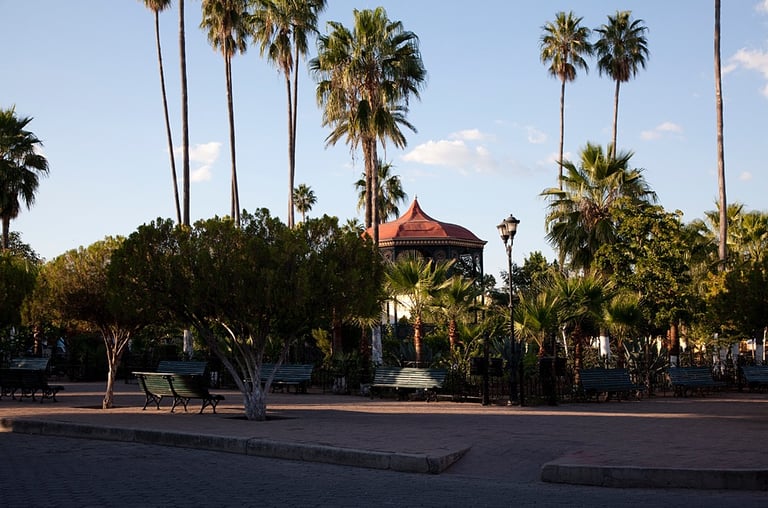
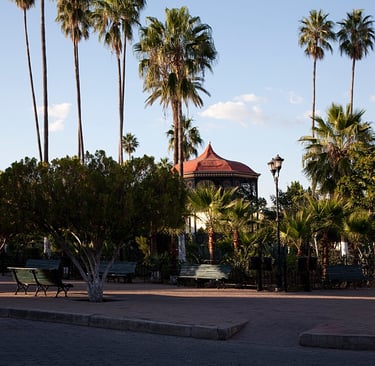
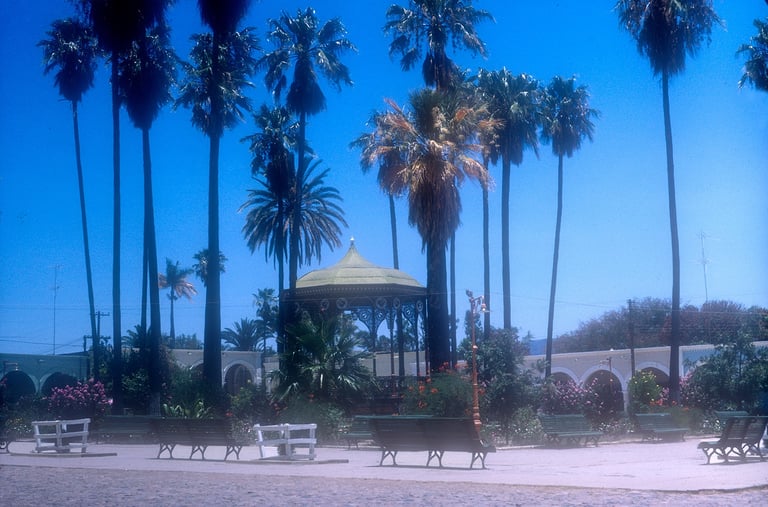
The roof of the kiosk has changed colors and there's much more greenery on the Plaza de Armas in 2012 than there was when the 1971 picture was taken. The curb from the street to the plaza is also much higher.
Hildred Vogel Aragón moves to Álamos, 1971
The difficulty in comparing pictures of Álamos taken decades ago with pictures taken last week is that the city center (el centro) looks much the same. Buildings may have been painted, trees may have been planted or removed—but these changes in the central city are minor when compared to cities of less historical importance. Our comparisons, therefore, primarily relate to people and their involvement in creating the Álamos of today.
Hildred (Hilde) Vogel Aragón, a California artist who specialized in ceramics, first visited Álamos in the mid-1960s with her neighbor and friend, Virginia Cole. Hilde’s daughter, Marta Reents, who lives in the casita her mother built, is not certain why Hilde came to Álamos, but after a stay in the Hotel Tesoros she rented a house and decided to make Álamos her permanent home.
Hilde built a house on property she purchased at 31 Galeana, across the street from what became La Puerta Roja. In 1971 Hilde, who was divorced from Marta’s father, married Gustavo Aragón of Álamos, and together they raised goats (Marta remembers the goats’ milk from her visits in the 1960s) and started a real estate business. Among the Americans who bought houses from Hilde and Gustavo were the late actor Carroll O’Connor, (television’s Archie Bunker) and Álamos long-time residents Earle and Joan Winderman.
After living many years on Galeana Street, Hilde bought property near the airport and built a small casita. The property gave her a chance to build a garden where she raised vegetables, and was especially proud of her rose garden. On the new property she hosted meetings of the Garden Club and on Sundays her “Meditation Circle” met at her house
One of the founders of the Las Comadres service organization, Hilde was active in helping those in need in the Álamos community. In 1995 she purchased a house in Green Valley, AZ, but continued to spend her winters in Álamos until her health failed. She died in 2007 at Age 93.
Marta Reents has renovated and enlarged her mother’s casita, and she now spends part of the year in Álamos. For a History Association presentation, Marta, a photography enthusiast, made scans of pictures taken by her mother in the 1960s and 1970s, and later selected six of these pictures to “re-photograph” for our Association’s “Then and Now” web page.
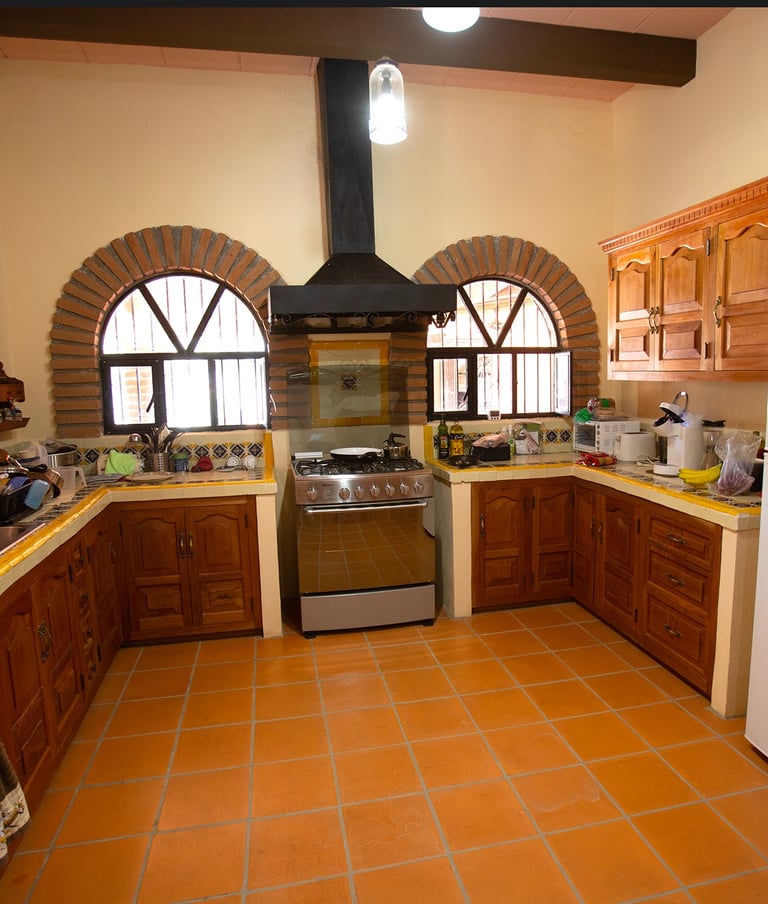
The kitchen in the casita Hilde Aragón built in Álamos
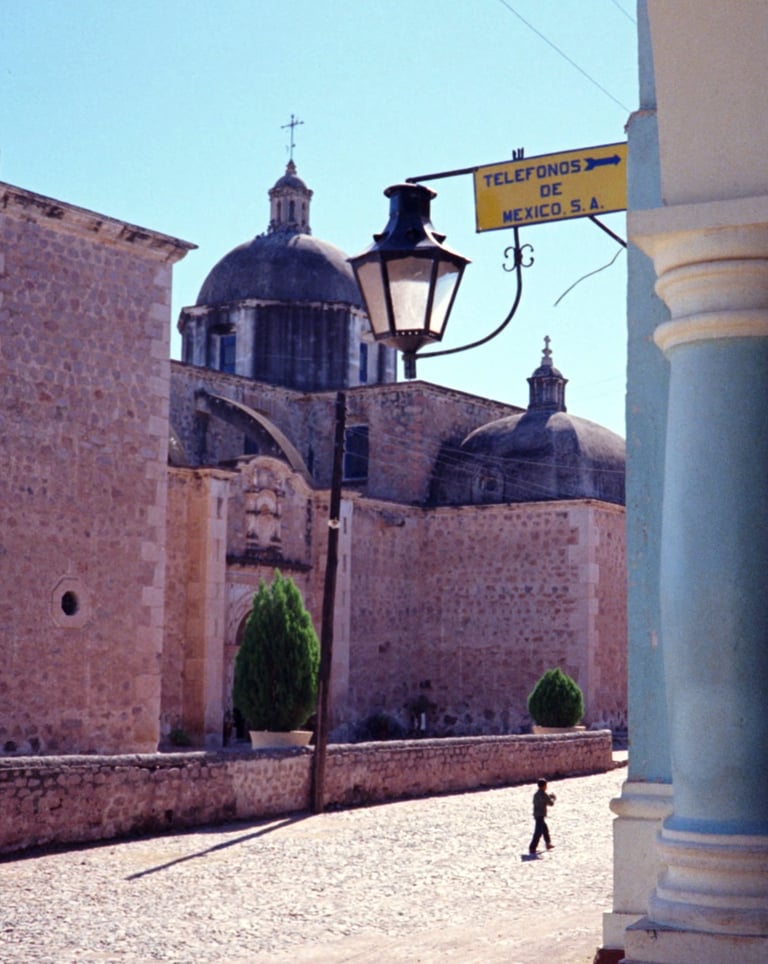
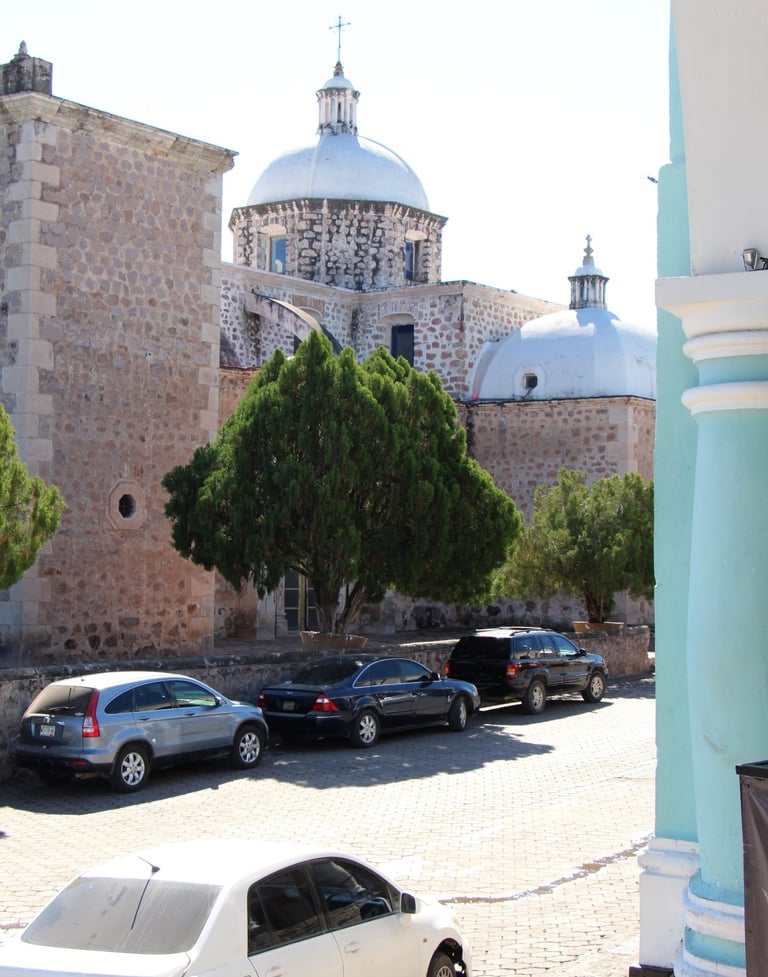
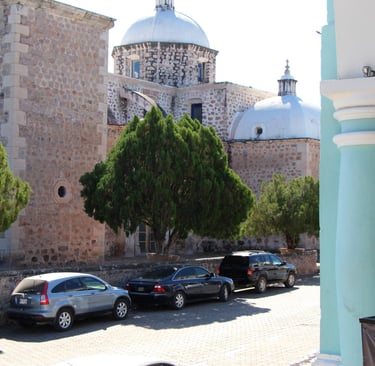
The “Then” photo (left) of the Alamos church with telephone sign was taken in November 1968. The sign was on the Hotel Portales, which was where the only telephone in town was located. The “Now” church photo was taken on January 26, 2020 from about the same location.
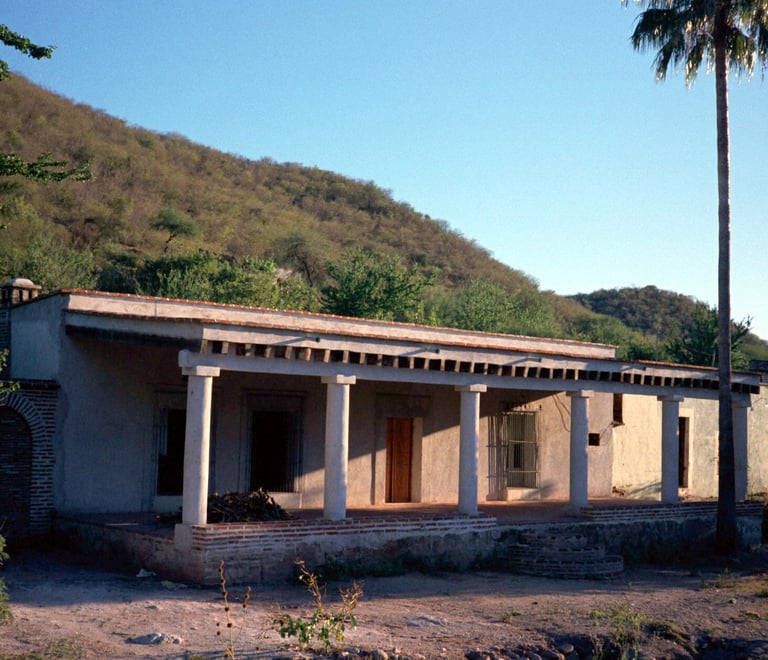
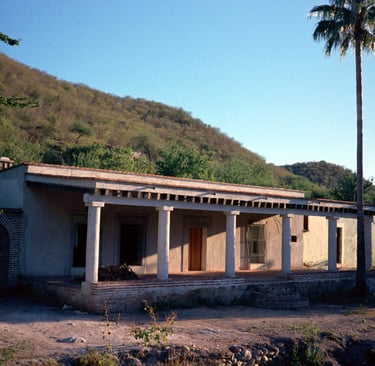
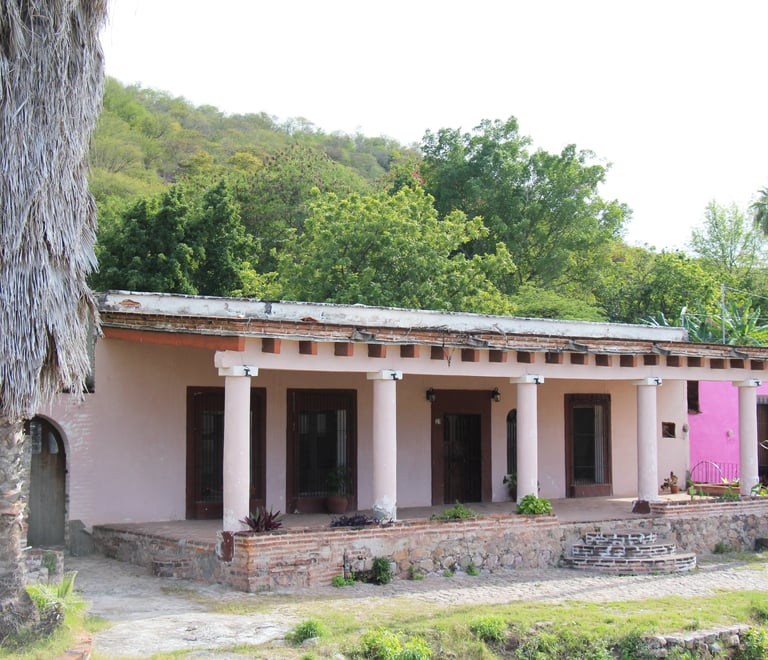
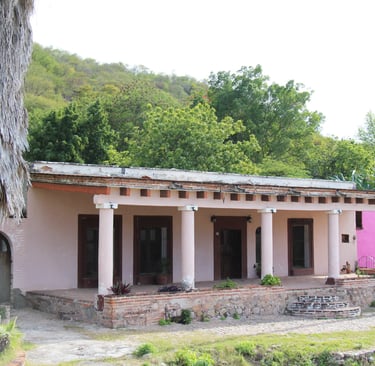
The “Then” photo at left is of of the house that Hildred rented from Frank (Pancho) and Betty Robles. It is located on the Arroyo agua Escondido. Marta Reents, her daughter, stayed in the house in 1968. The first photo was taken by Marta in November 1968, and the “Now” photo was taken February 1, 2020.
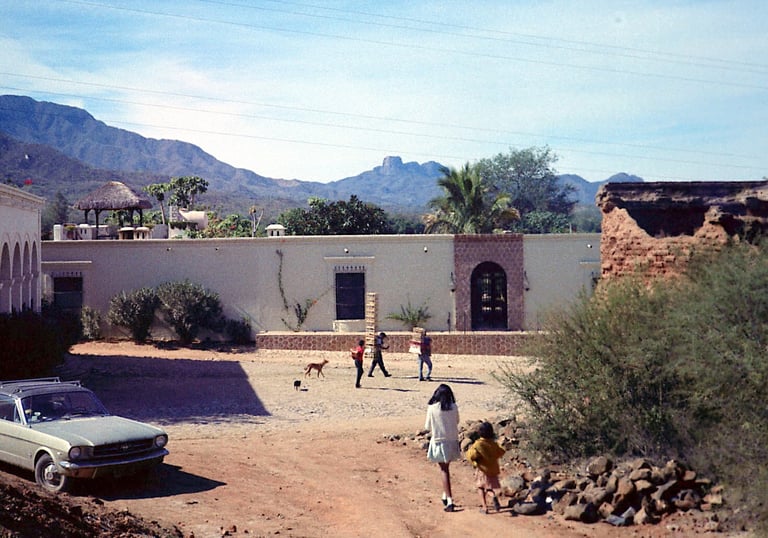
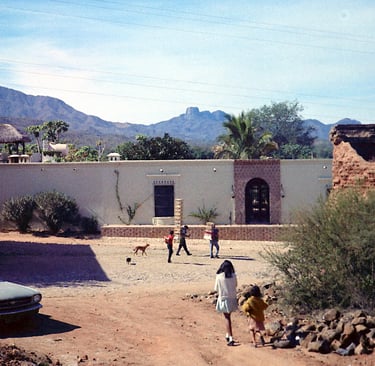
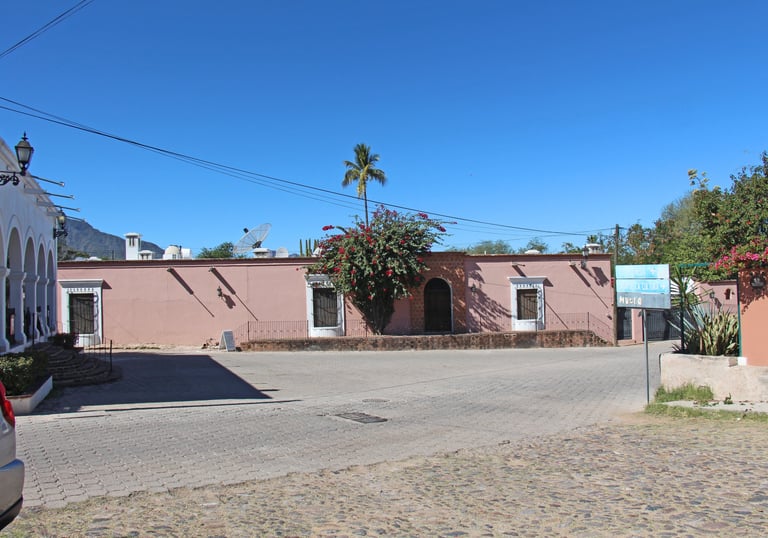
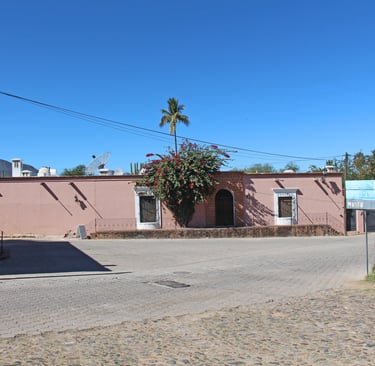
The photo at left was taken in 1973 from yard of Hildred’s house of Galeana Street, showing her 1965 Mustang at left and the Maria Felix ruin on the right of photo. The January 2020 photo at right shows a corner of the restored Maria Felix museum.
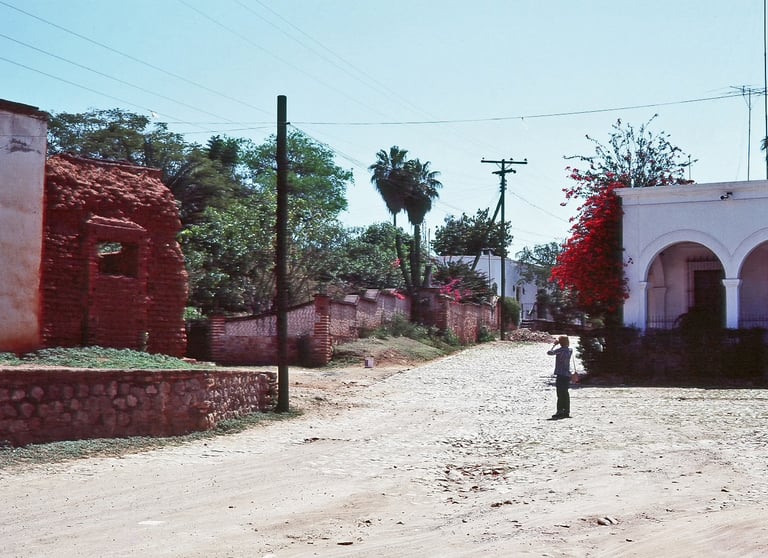
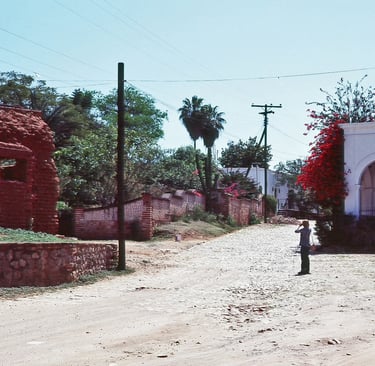
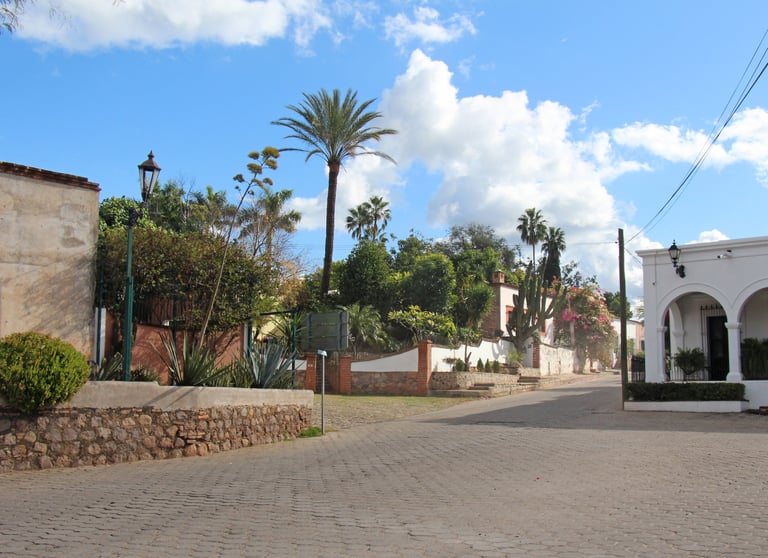
The “Then” photo of Calle Galeana shows Joan Powell taking a photo of Hildred’s Galeana house, with the future Puerta Roja on the right and the Maria Feliz ruin at left. The 2020 photo at right shows the Maria Felix museum at left, Hildred's former house at center, and Puerta Roja at right.
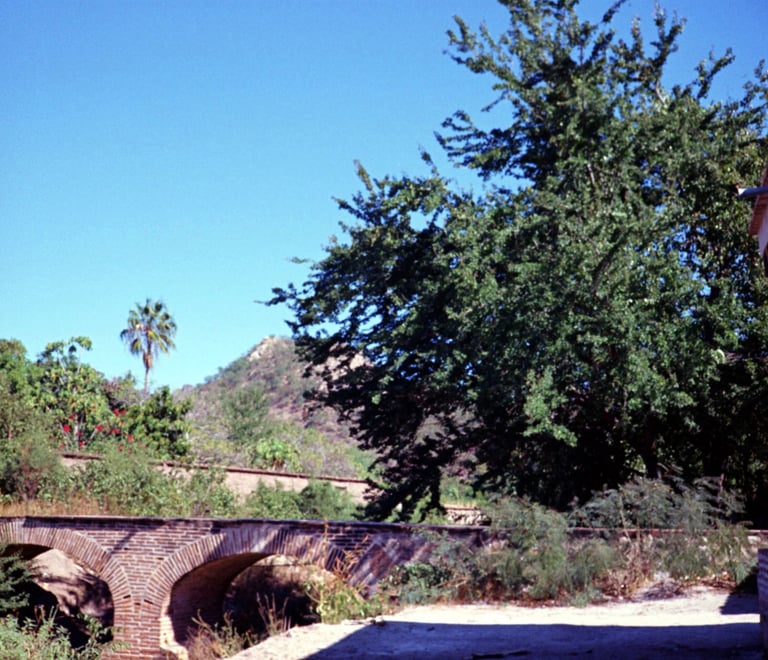
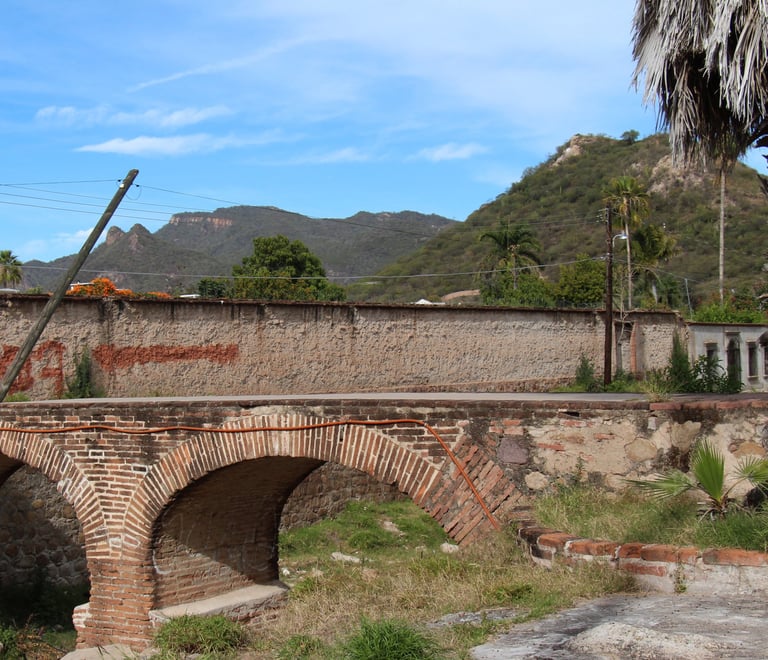
The “Then” photo of Ramon’s Bridge–-a bridge, which crossed the arroyo to the rental house where Hildred stayed. That photo was taken in November, 1968. by Marta, and the photo at right was taken February 1, 2020.
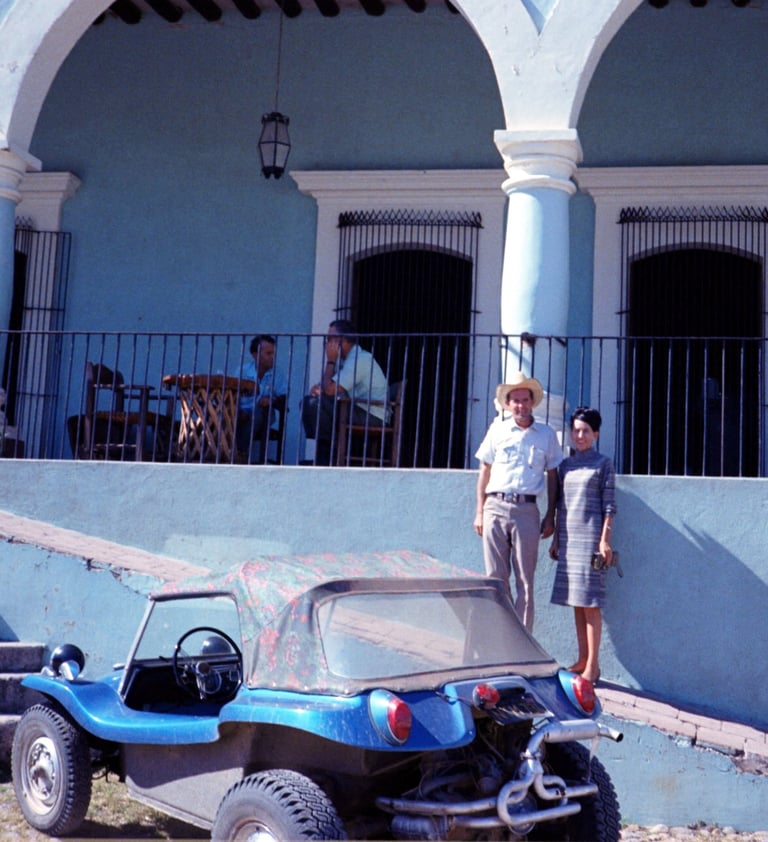
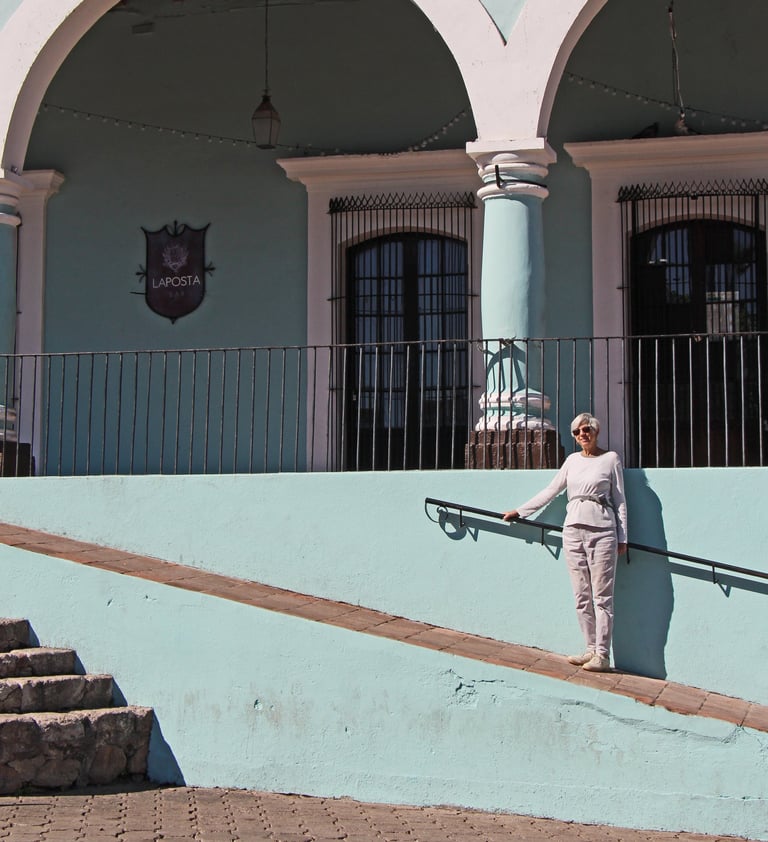
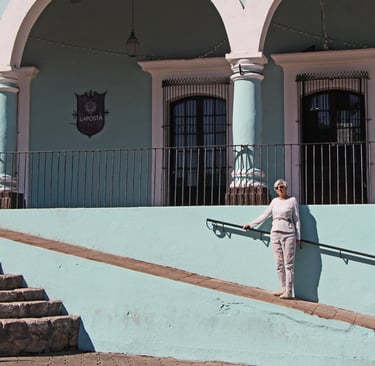
The "Then" photo is of Hildred Reents and Bill Alcorn, taken in front of the Hotel Portales in November, 1968. The photo at right is of Marta Reents, Hildred's daughter, taken in January, 2020, on the same ramp in front of the hotel.
Madero Street: 1940 - 2016
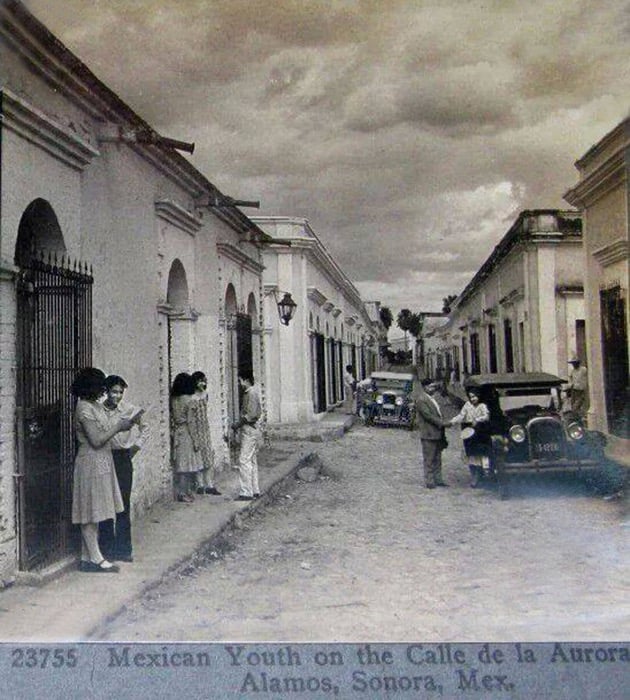
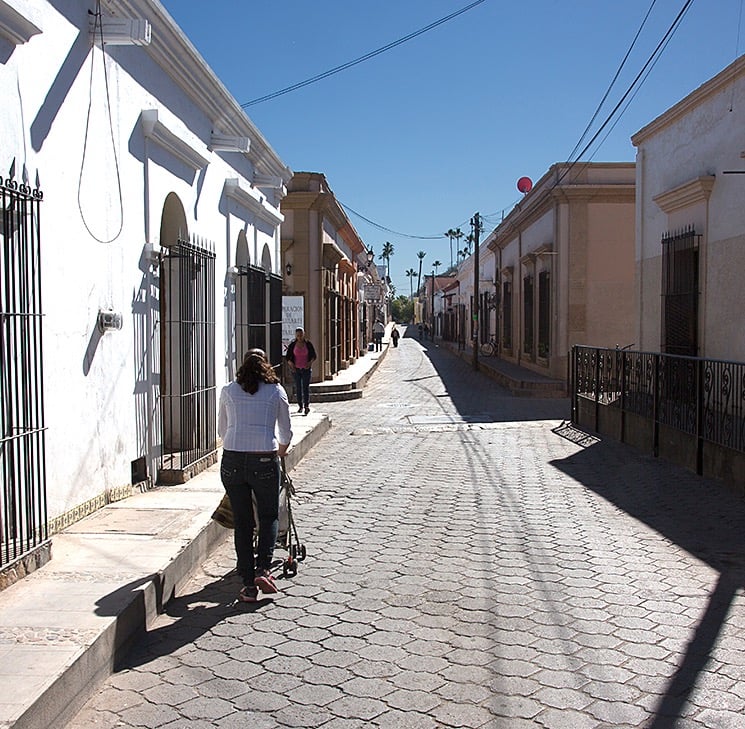
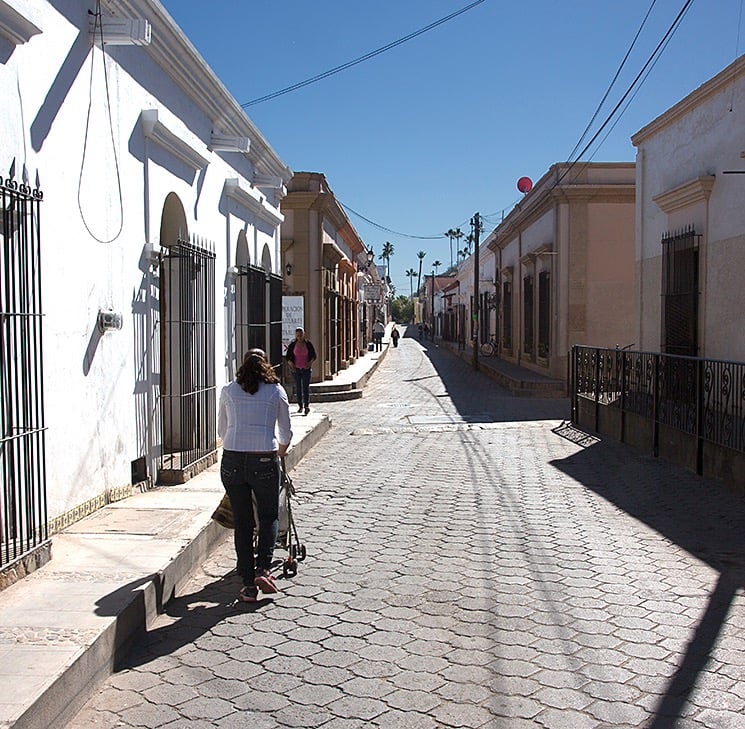
The picture above most likely was posed. Five young people engaged in conversation to the left, a man and a woman shaking hands in the street—it’s unlikely that this is a candid photo. The cobblestone street is rough when compared to the concrete street in the 2016 picture, and the street in 2016 is much lower as well. There were no electric lines 80-some years ago, but Madero Street (then called Aurora Street) today looks much as it did in 1940.
2016
1940
Comercio Street: 1910 - 2016
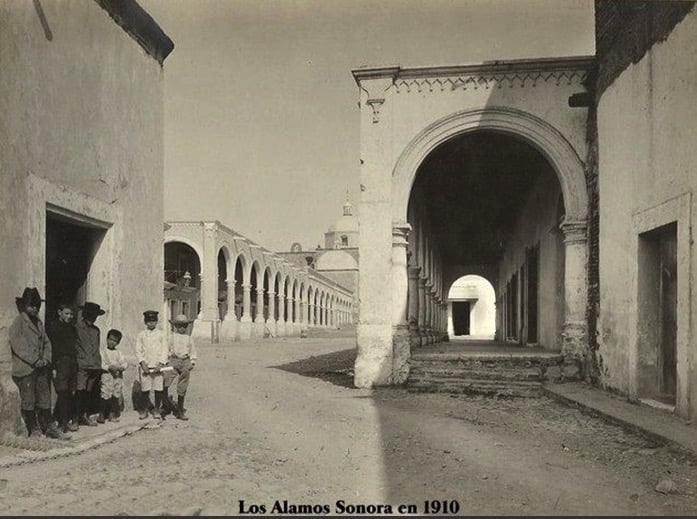
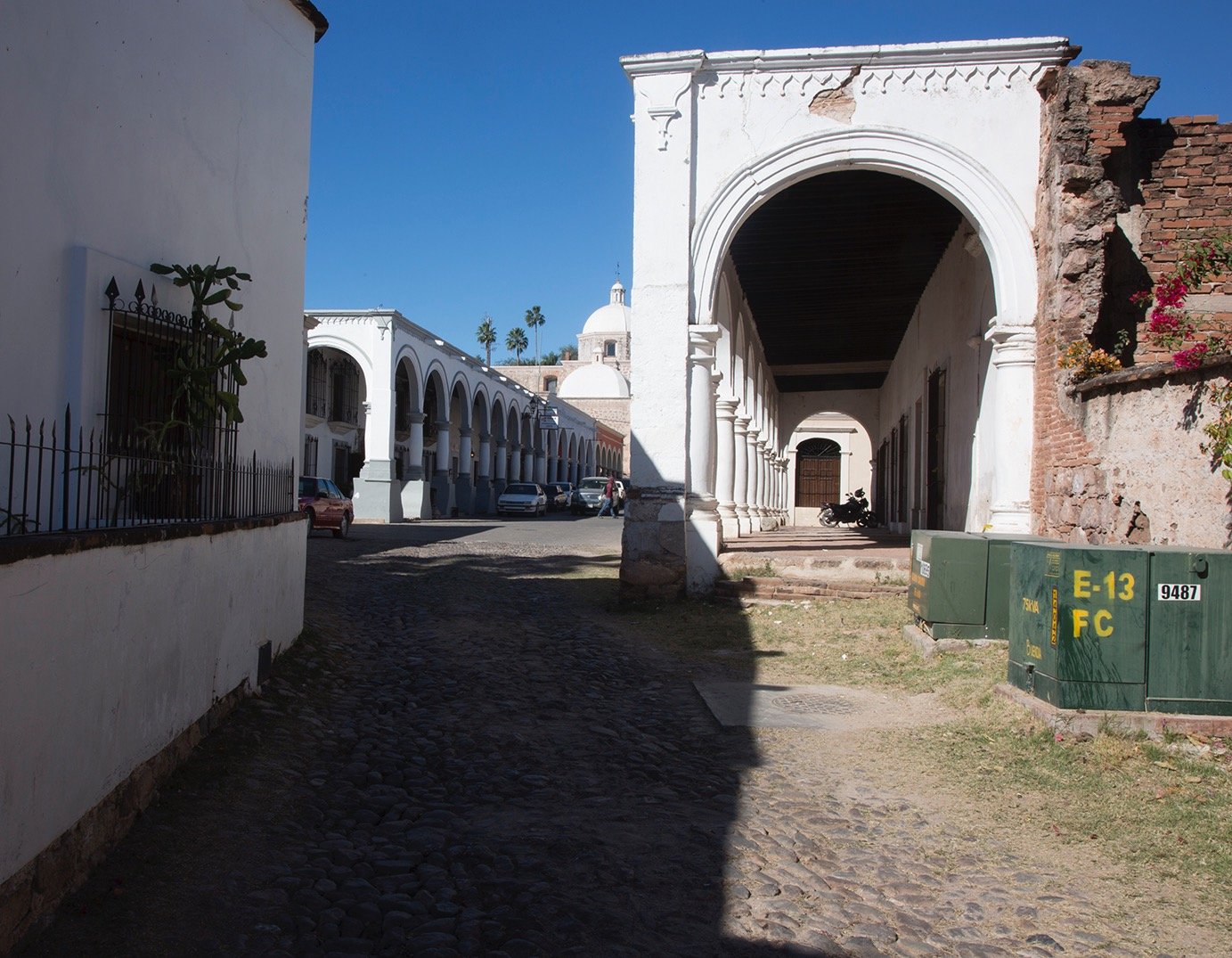
The 1910 picture looks west on Comercio Street toward the east side of the church, la Iglesia de nuestra Señora de la Purísima Concepción. Six youth are posed in front of a building on the left, and to the right is the historic governor’s mansion, which for the most part has disappeared in the last century. The same view in 2016 shows the same arches on both sides of the street—basically unchanged in more than a century.
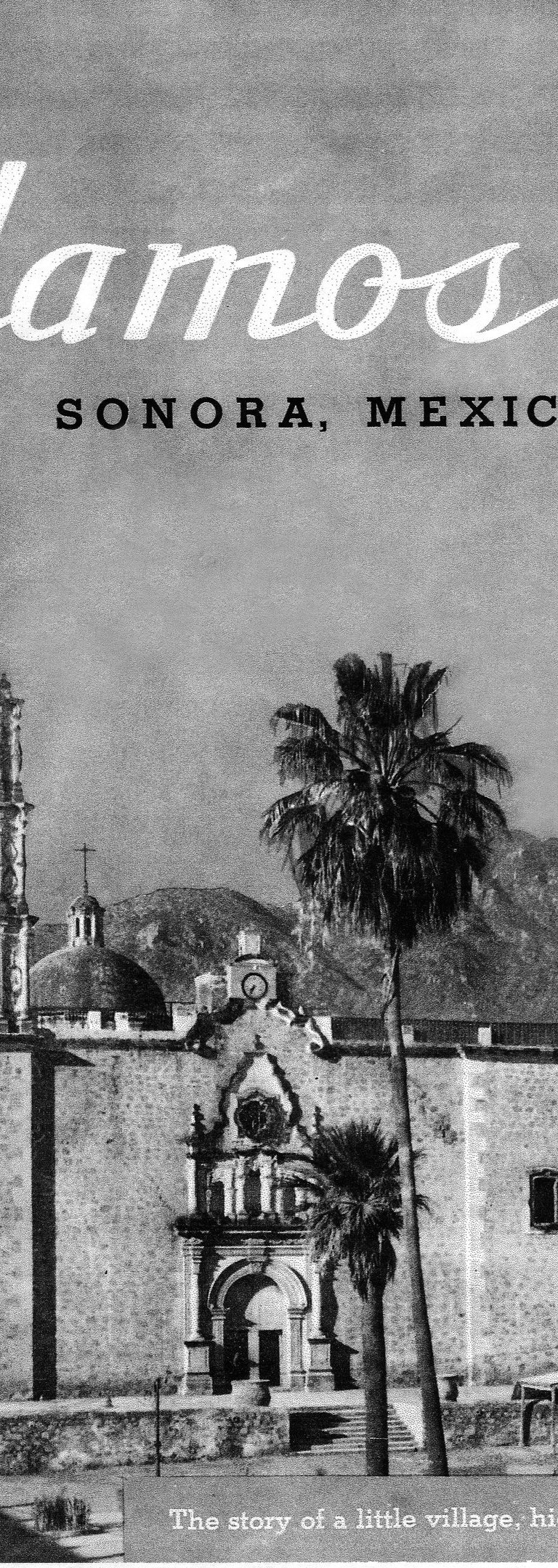
'Village Hidden Away for Centuries,' 1954
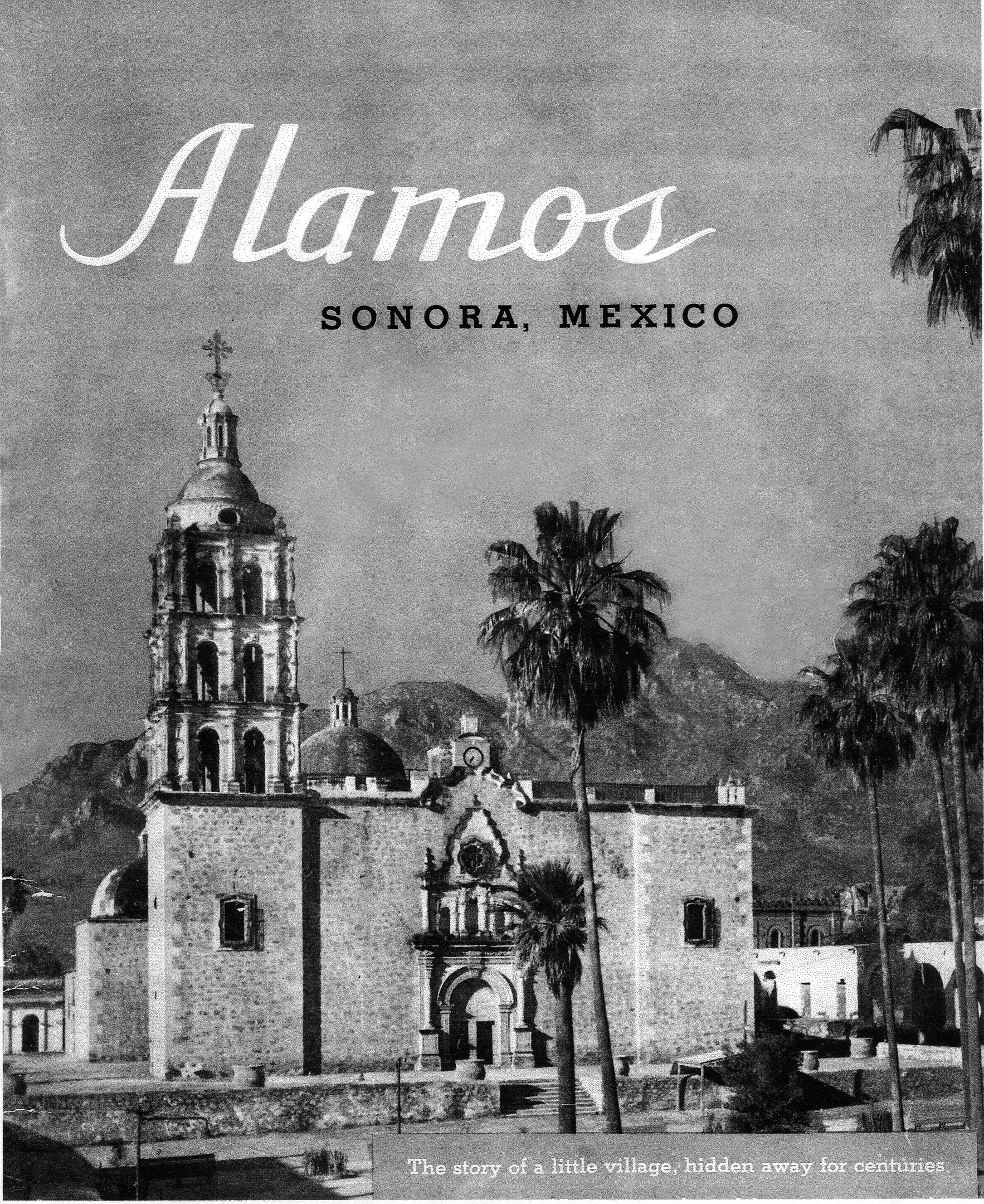
The "Publications Related to Álamos" section of this website has a complete copy of a 32-page booklet on Álamos published in 1954. Included in this booklet are pictures taken in 1954 (or previously) of street scenes, historical buildings, and people going about their regular lives in our community. For a 2009 presentation, the Álamos History Association took pictures of many of these locations to document changes over the past 60 years.
Unfortunately it was often not possible to find the same camera angle, and lenses of the 1950s cameras have a different perspective than our zoom lenses of today. Selected images from that 2009 slide presentation can be seen below.
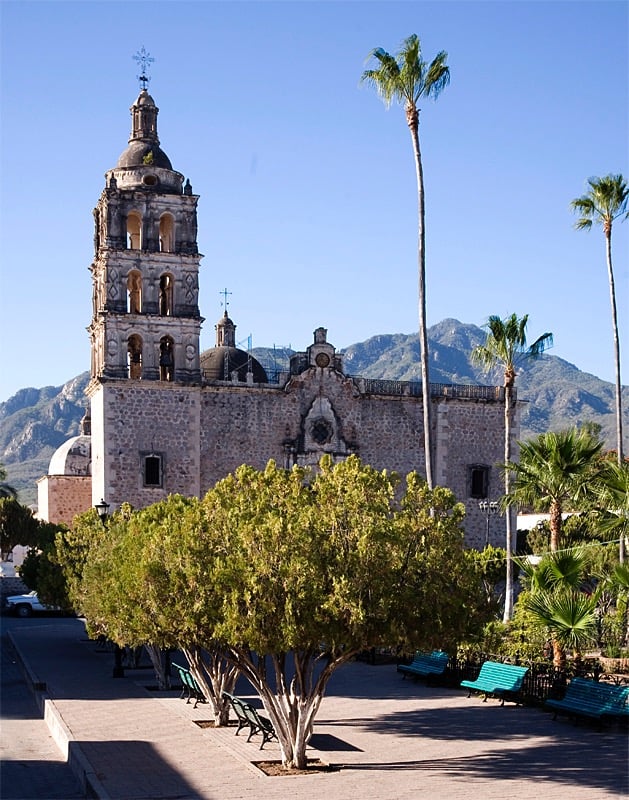
La Purísima Church looks much the same, but the landscaping on the plaza blocks the complete view of the 1954 image..
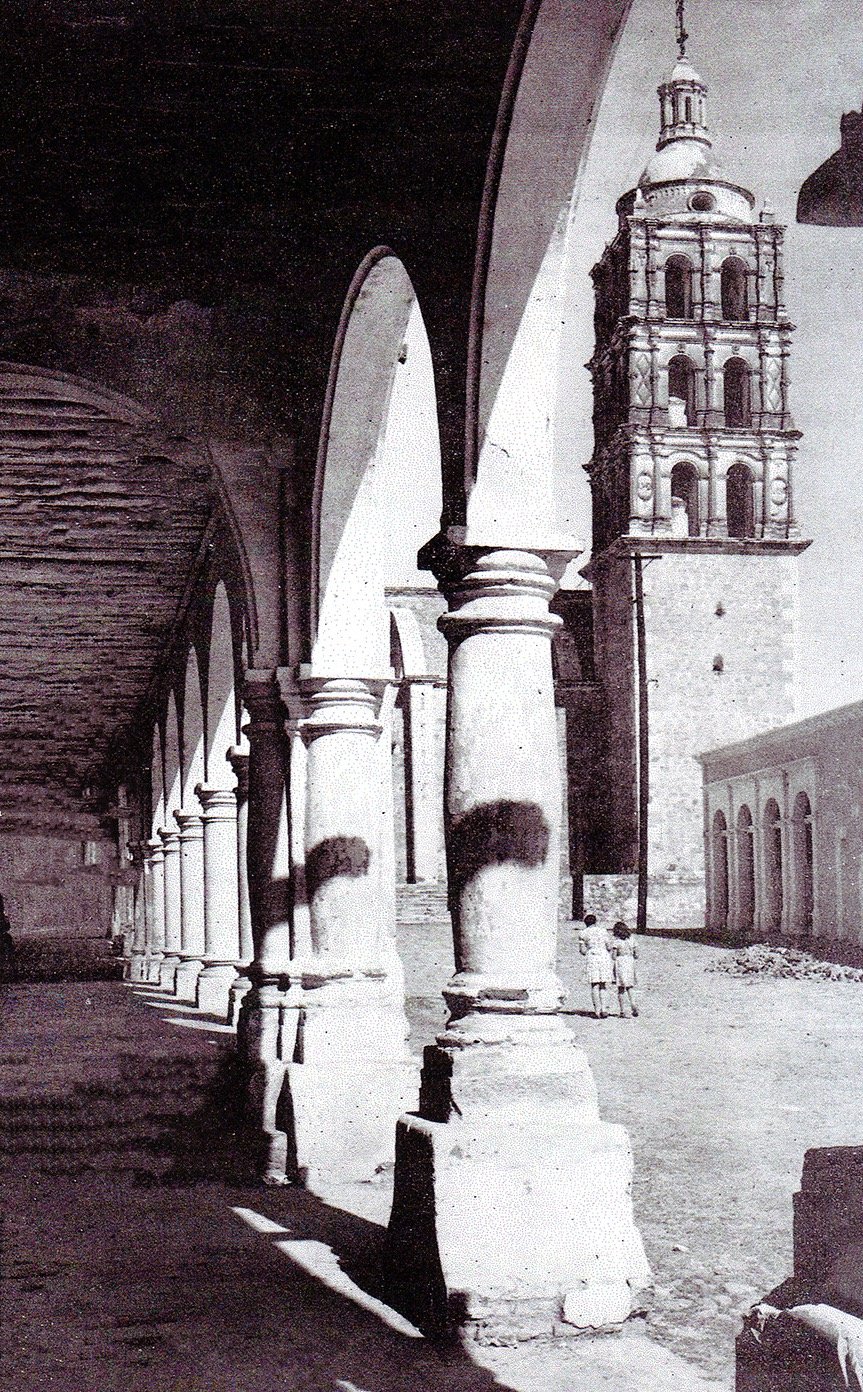
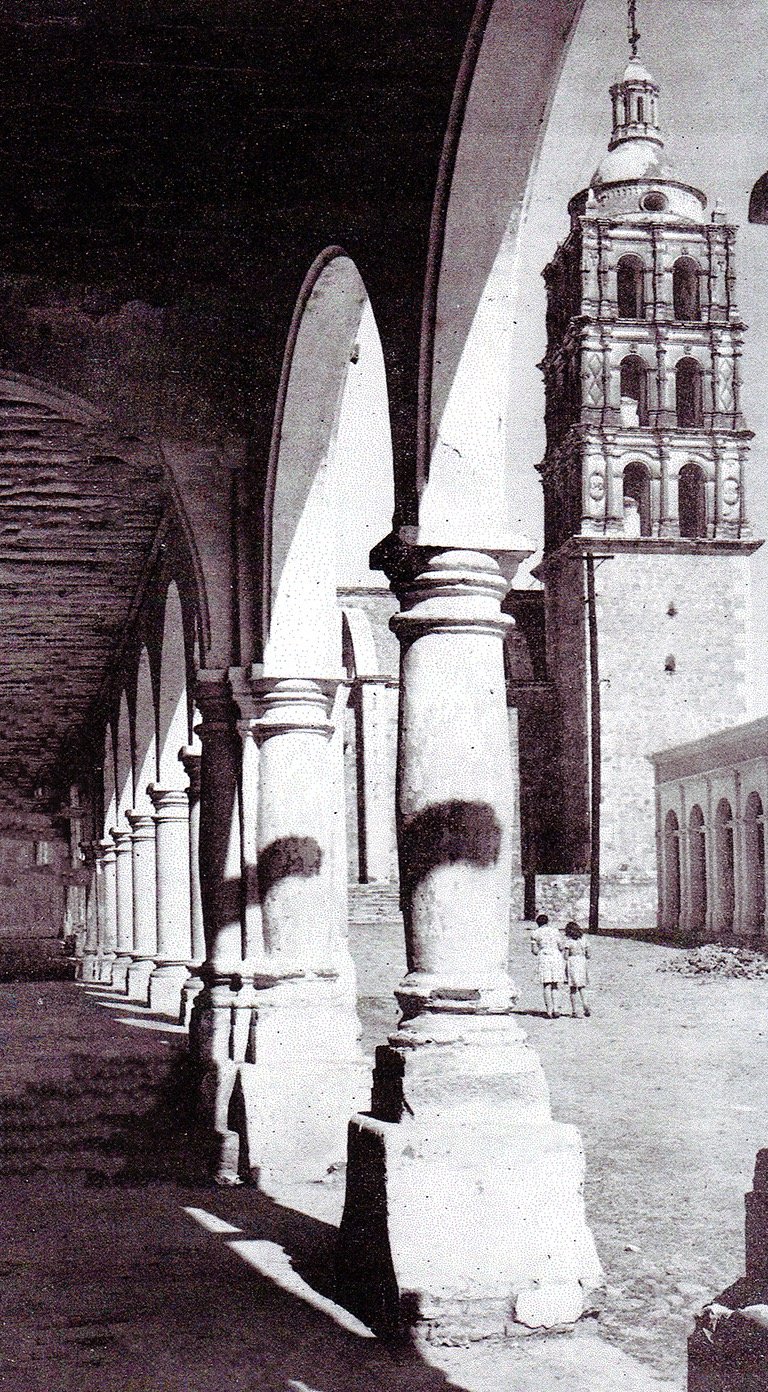
La Calle Comercio in 1954 appears as a wide wall-way, and not the busy street it has nowbecome.
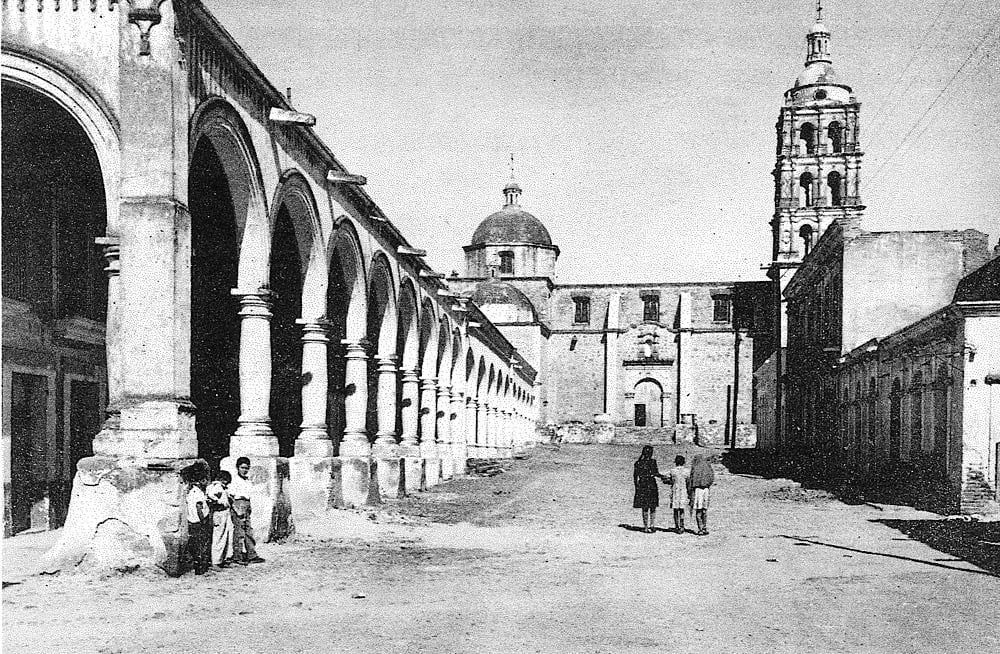
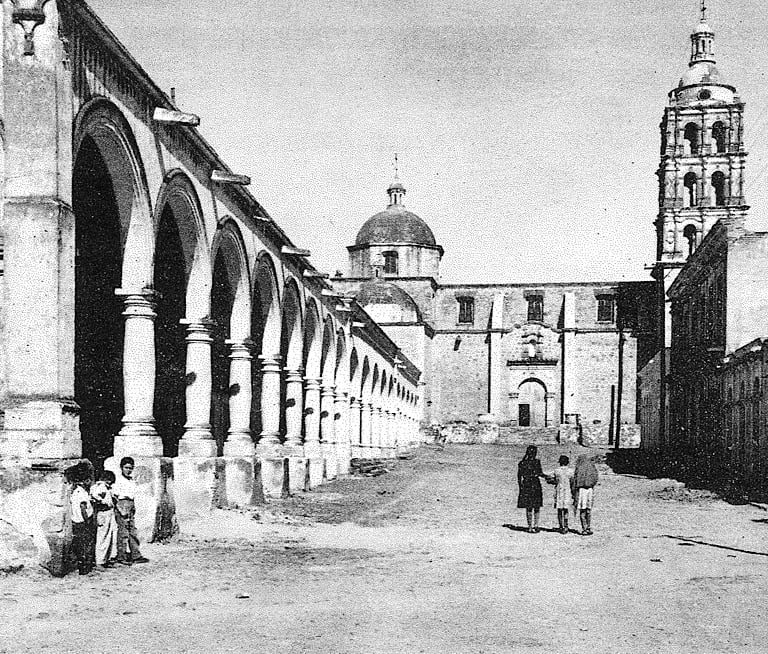
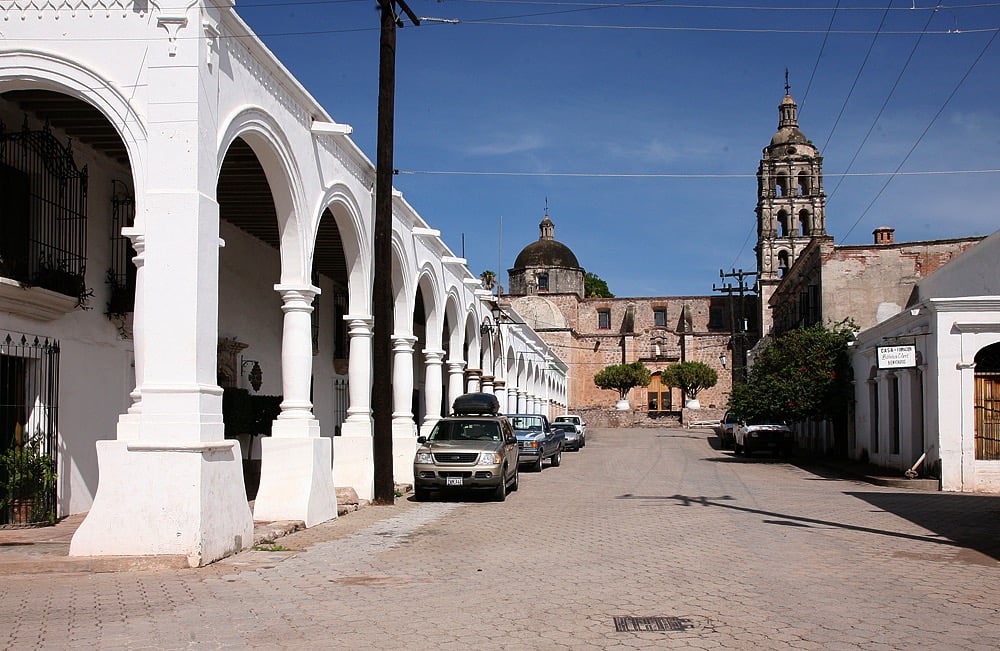
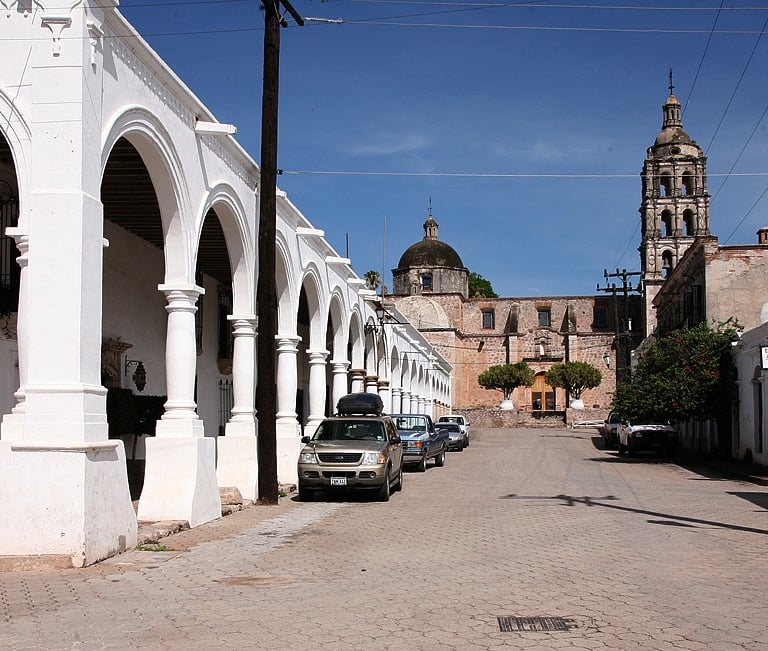
Comercio Street in 1954 and how it looked in 2008
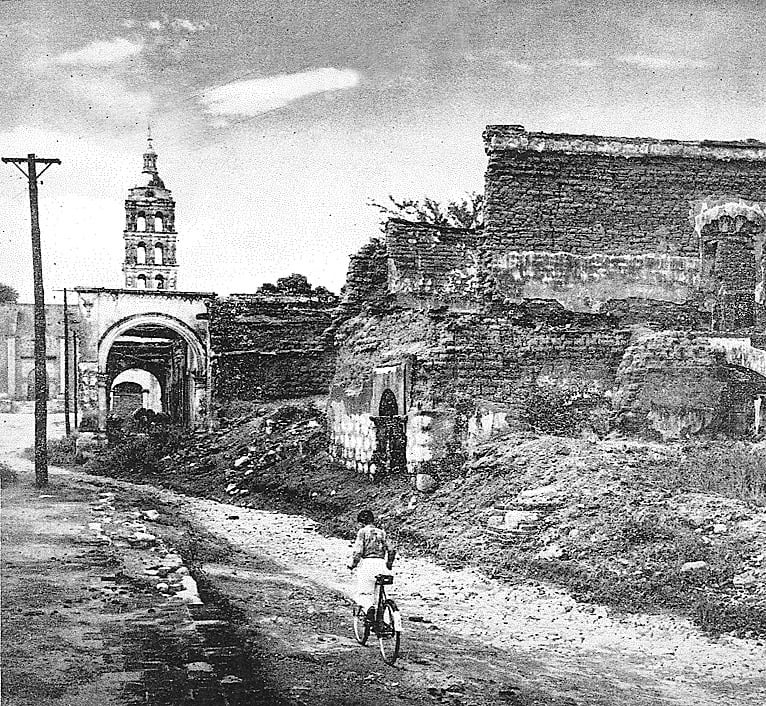
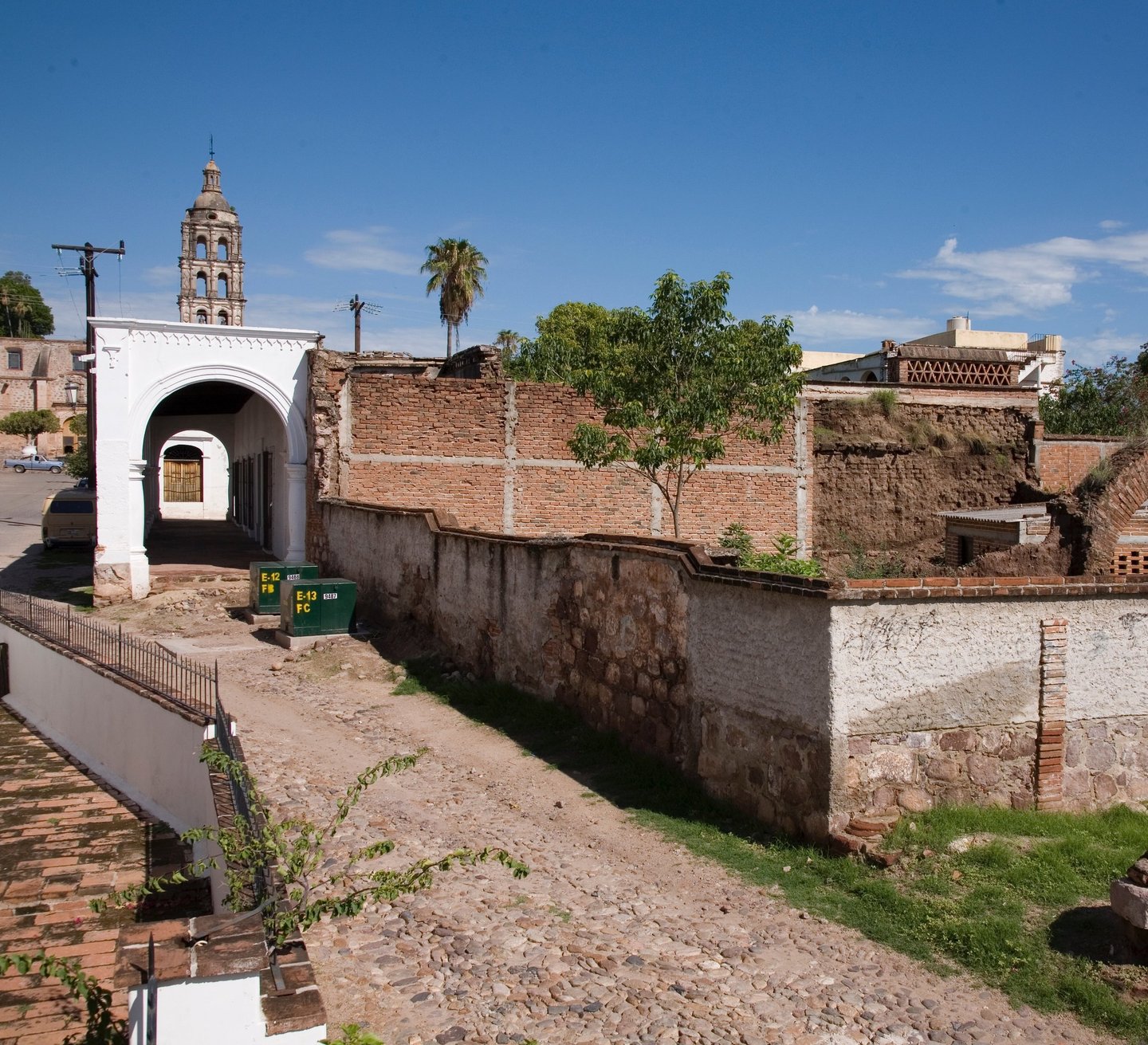
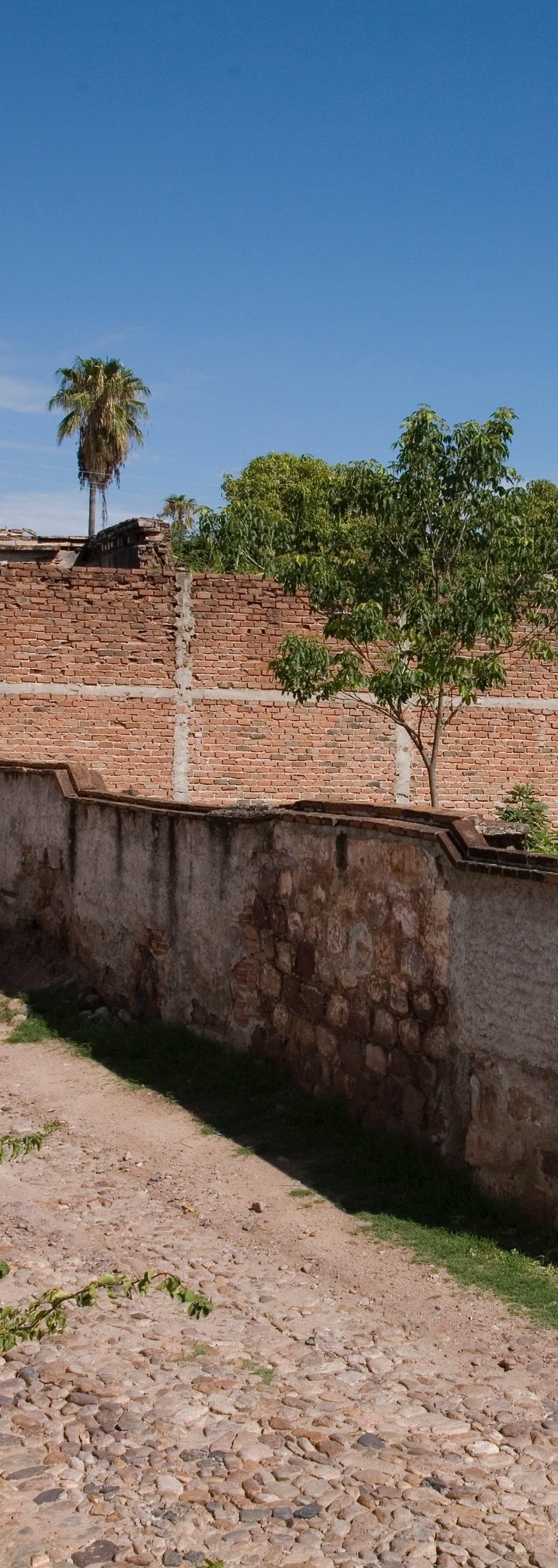
In 1954, a boy bikes along the ruins of the governor's palace, which no longer had a second floor in 2008 photo at right.
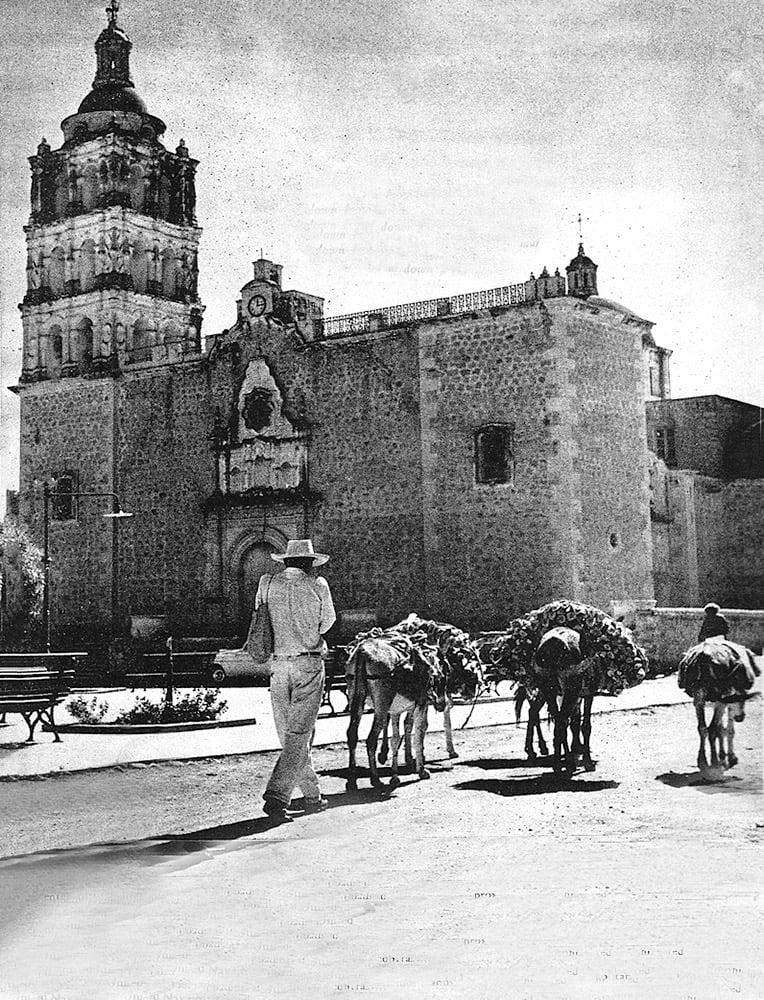
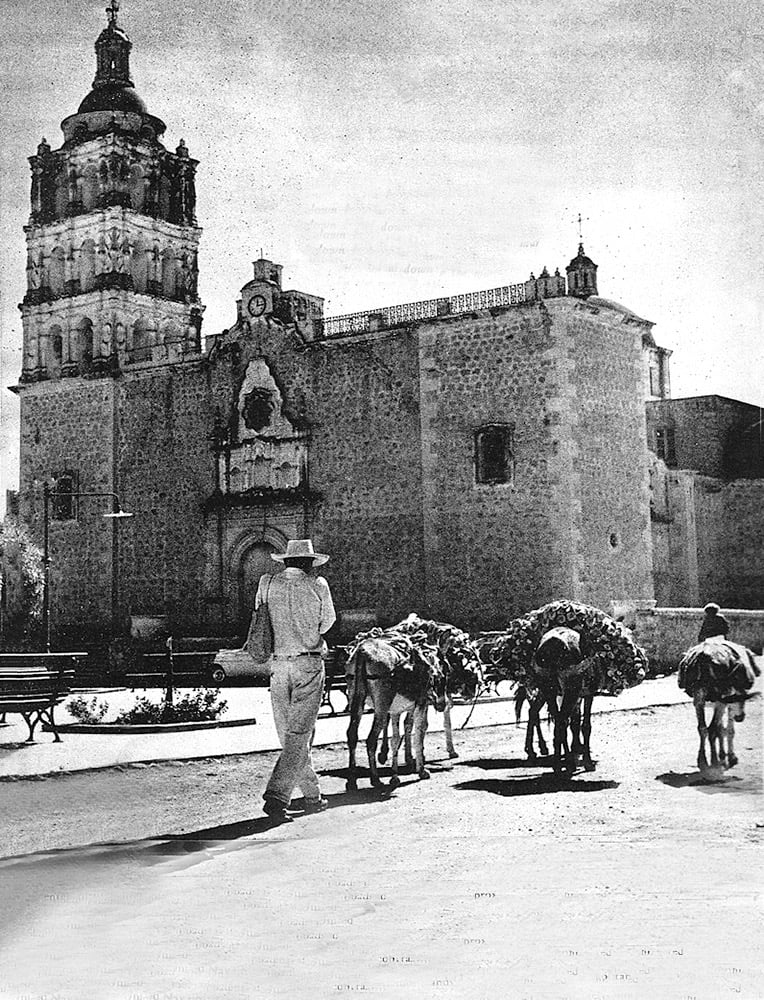
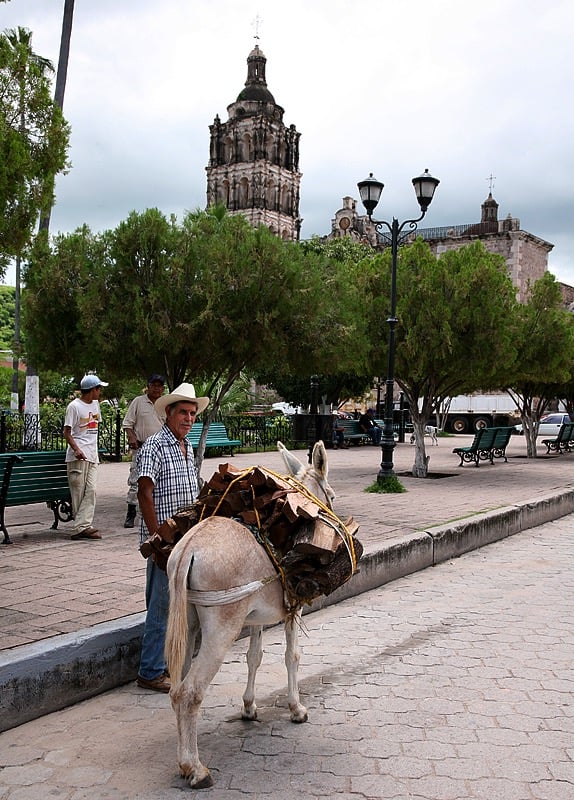
In the image it left, burros loaded with firewood have walked up the Callejón del Beso and now pass by the Plaza de Armas. In the picture at right, Ramón Sánchez stands beside his burro in a 2008 photo.
About the only difference in the 1954 picture at left and the 2008 picture at right is the tree in the recent photo.
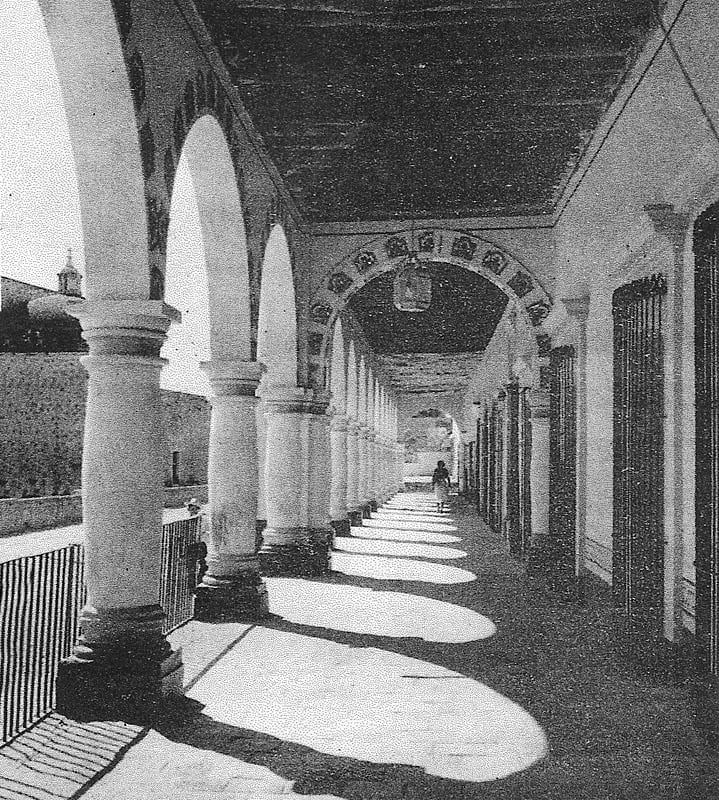
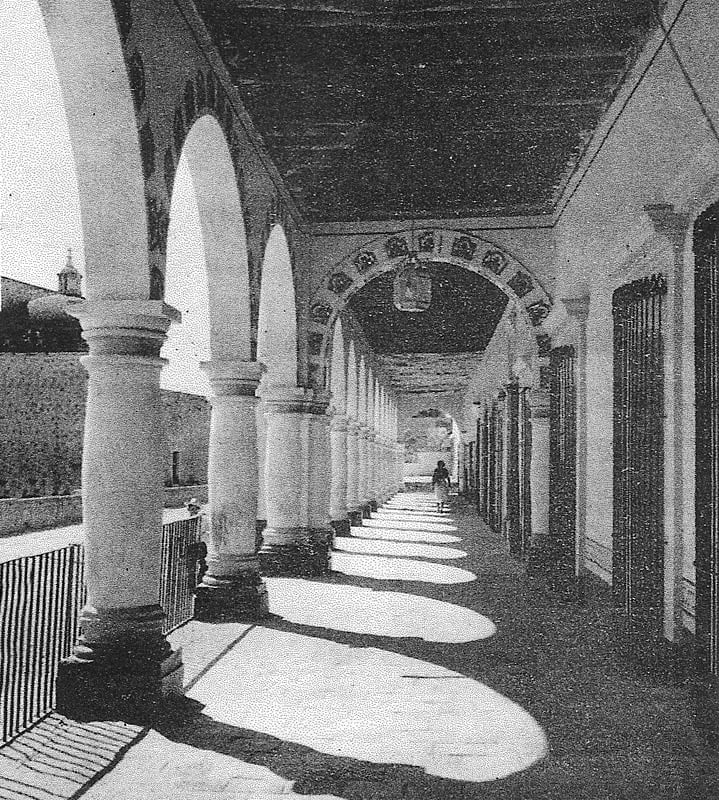
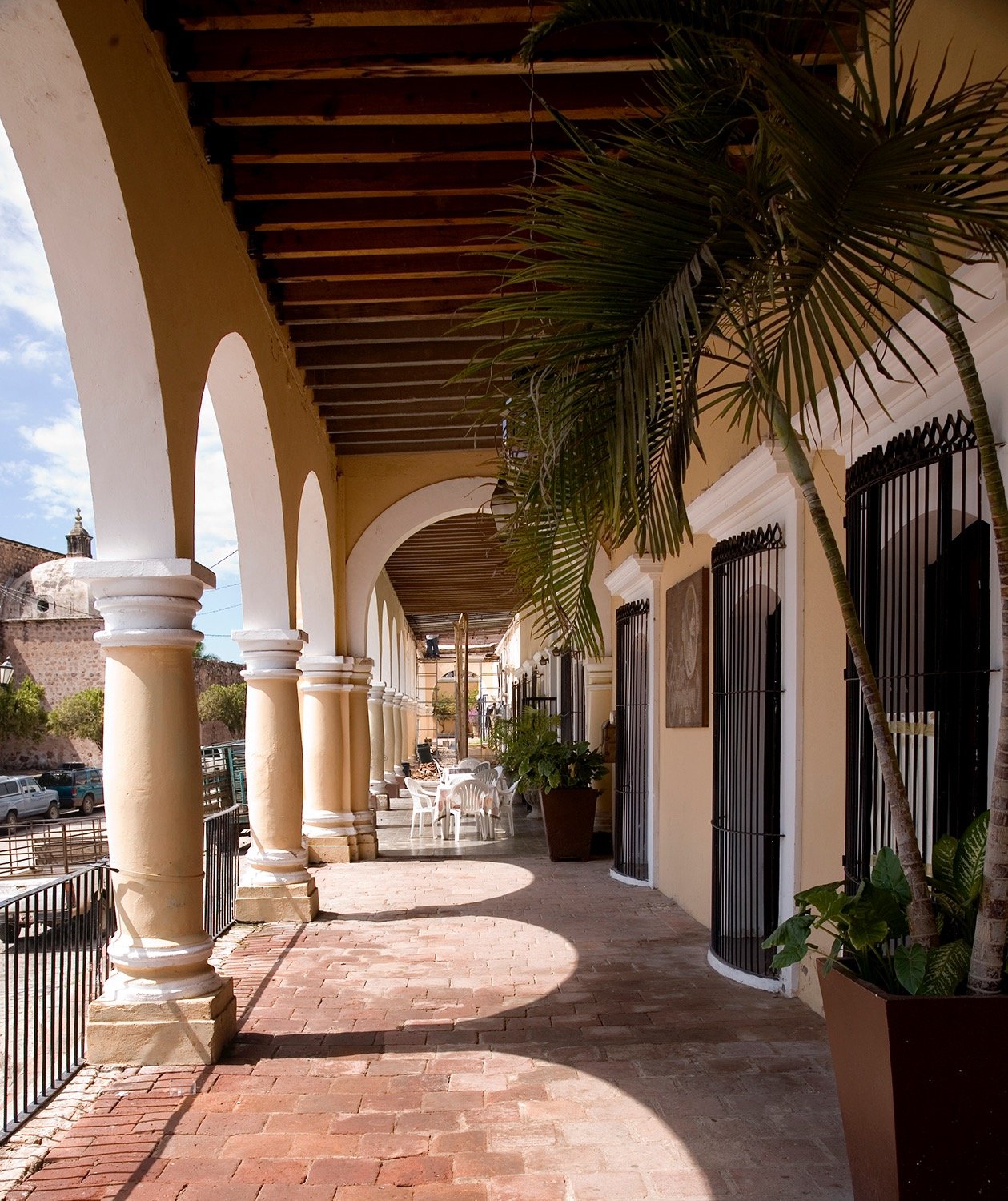
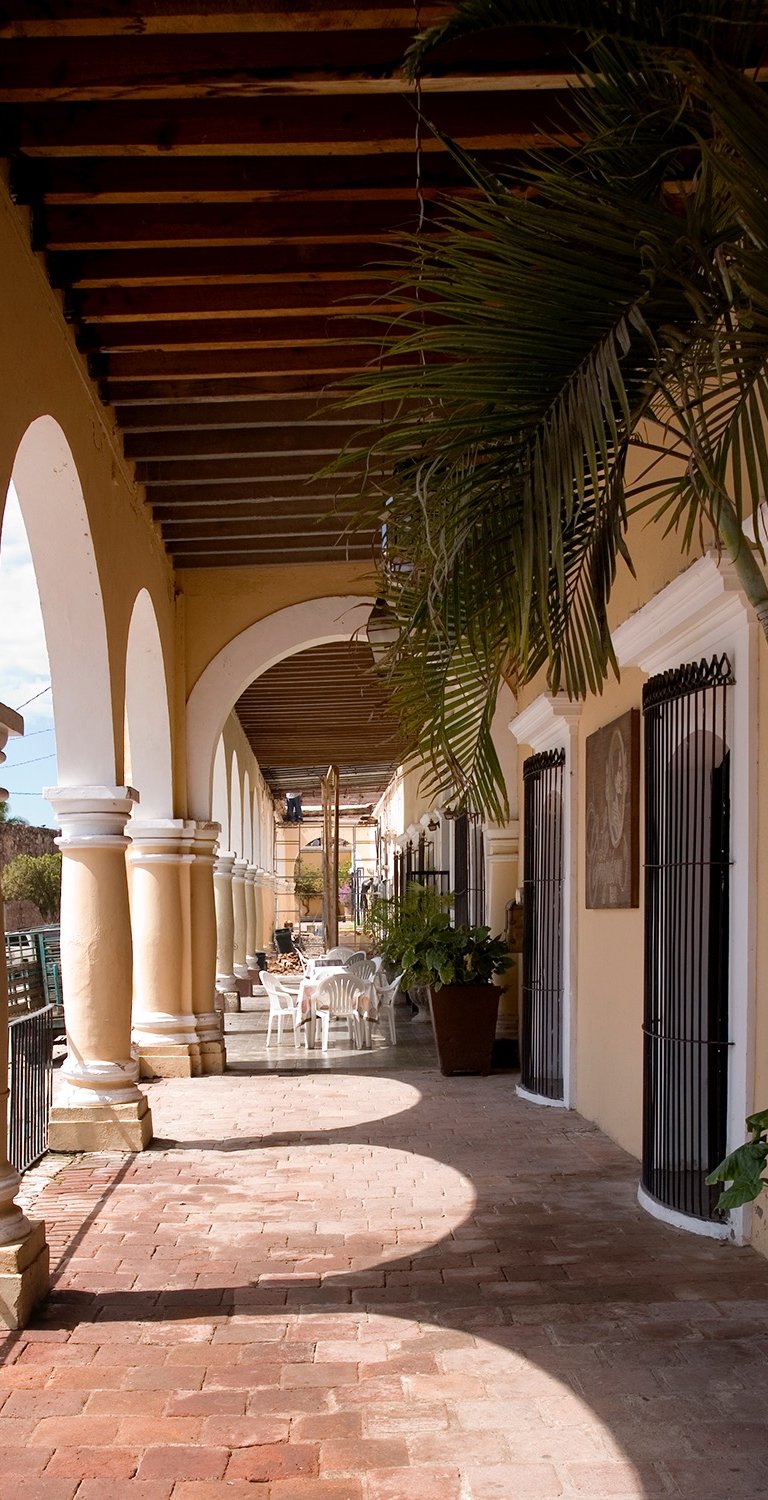
Every resident and visitor to Álamos has walked down the patio in front of the Almada house which, at times, has had restaurants, gift shops, and the Los Portales hotel. The purchase of the Almada house in 1947 by Levant Alcorn led to the dramatic changes of thr Álamos revival.
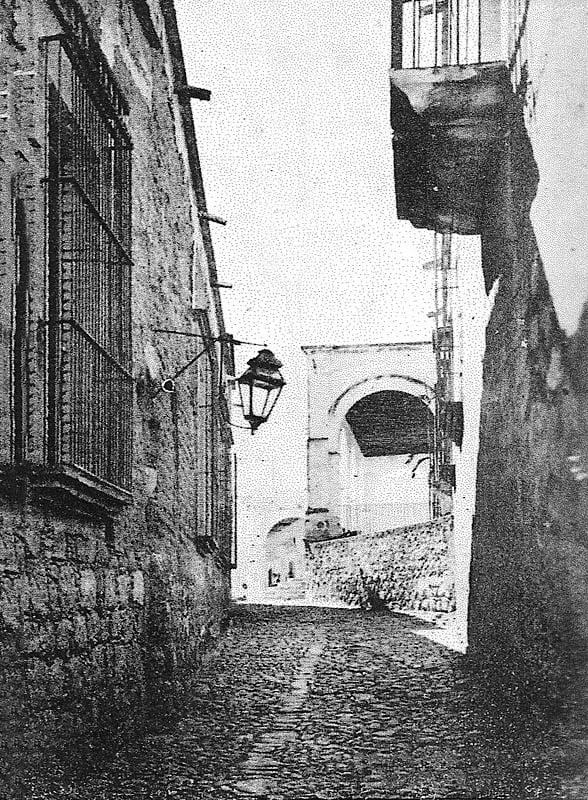
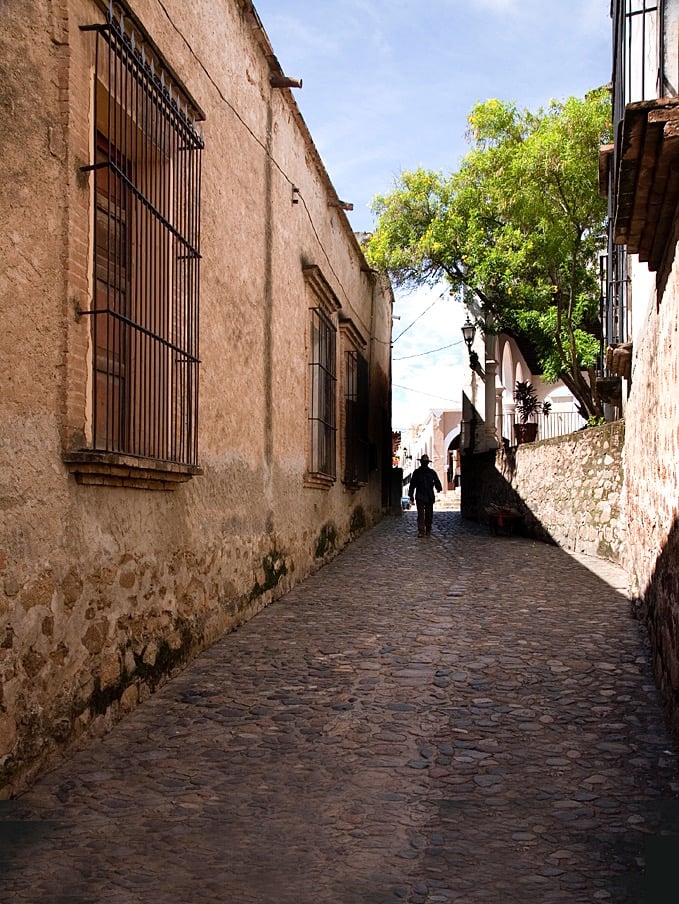
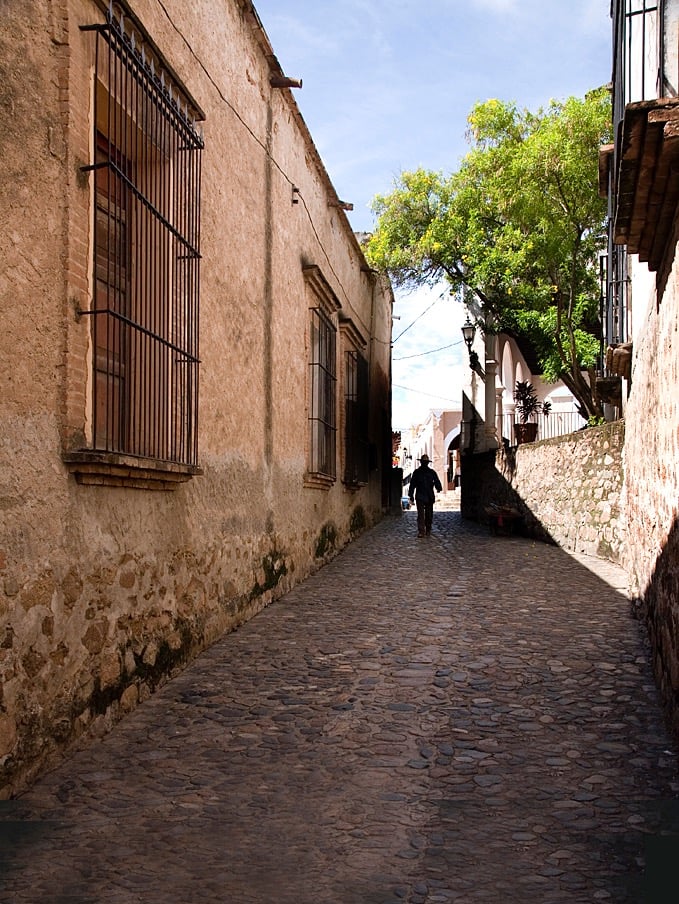
A decision was once made for the Kissing Alley, el callejón del beso, to have its cobblestones replaced by pavement. John Hilton, in the preface to the second edition of "Sonora Sketchbook," takes credit for preserving the historic surface.
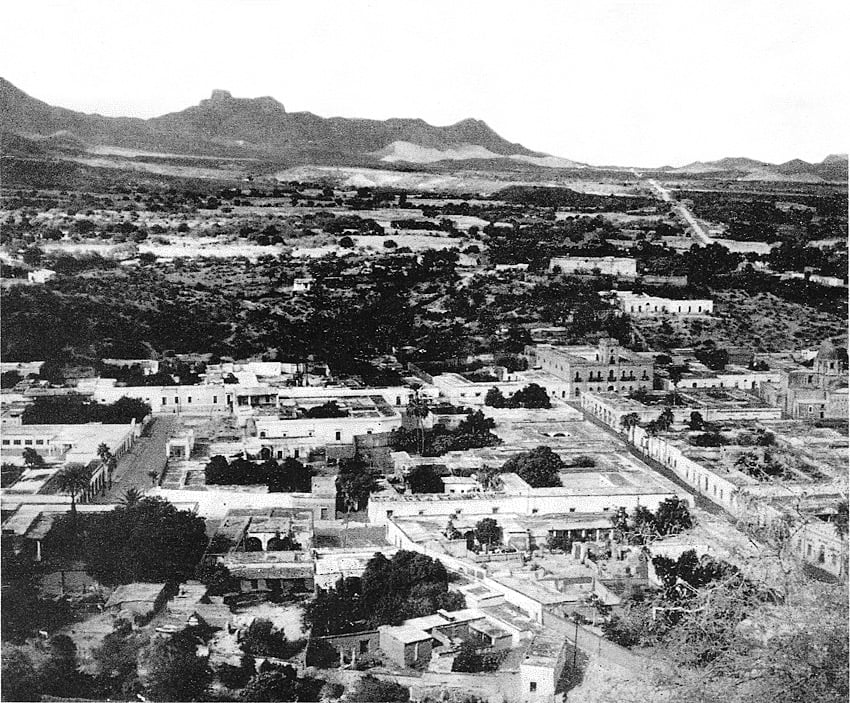
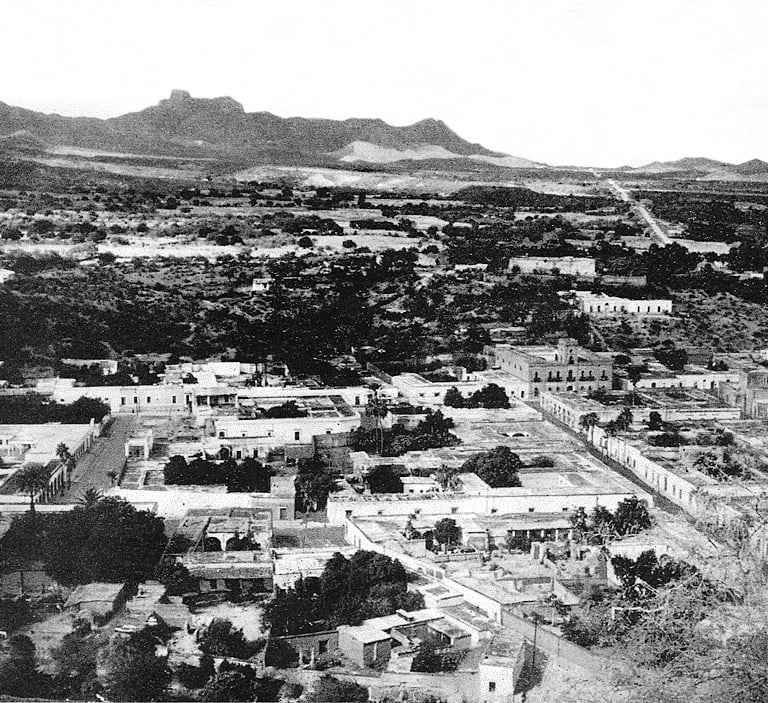
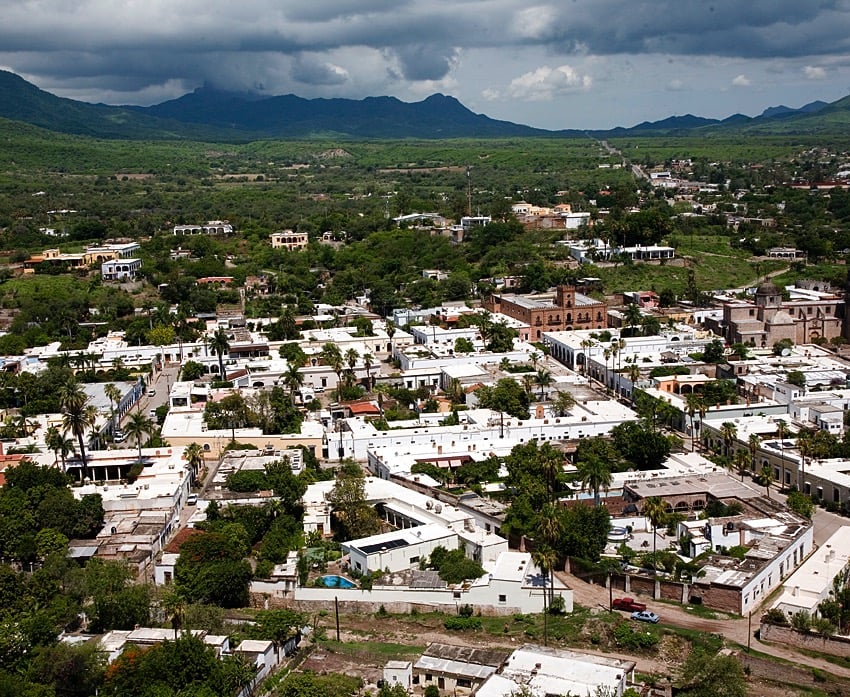
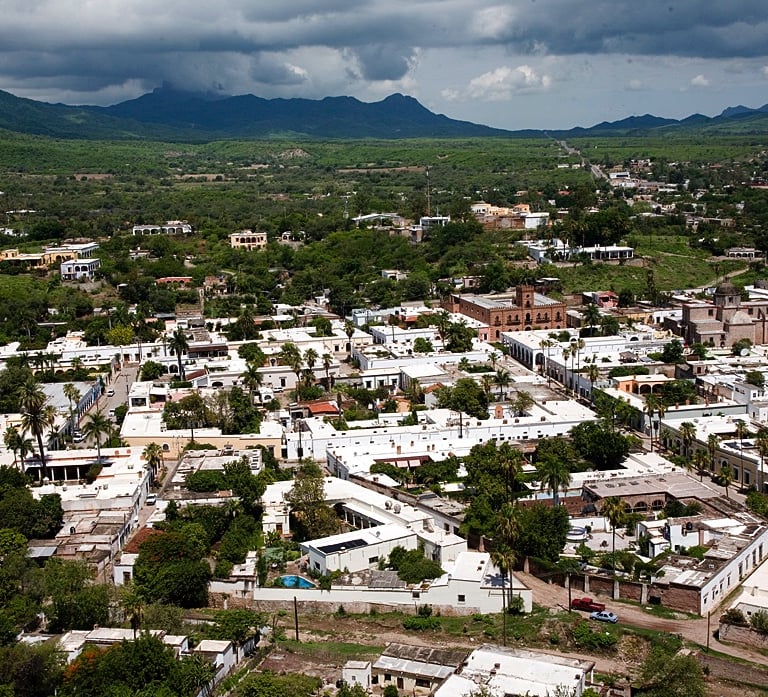
From the Mirador view, Álamos look similar—but larger—than in the 1954 picture.
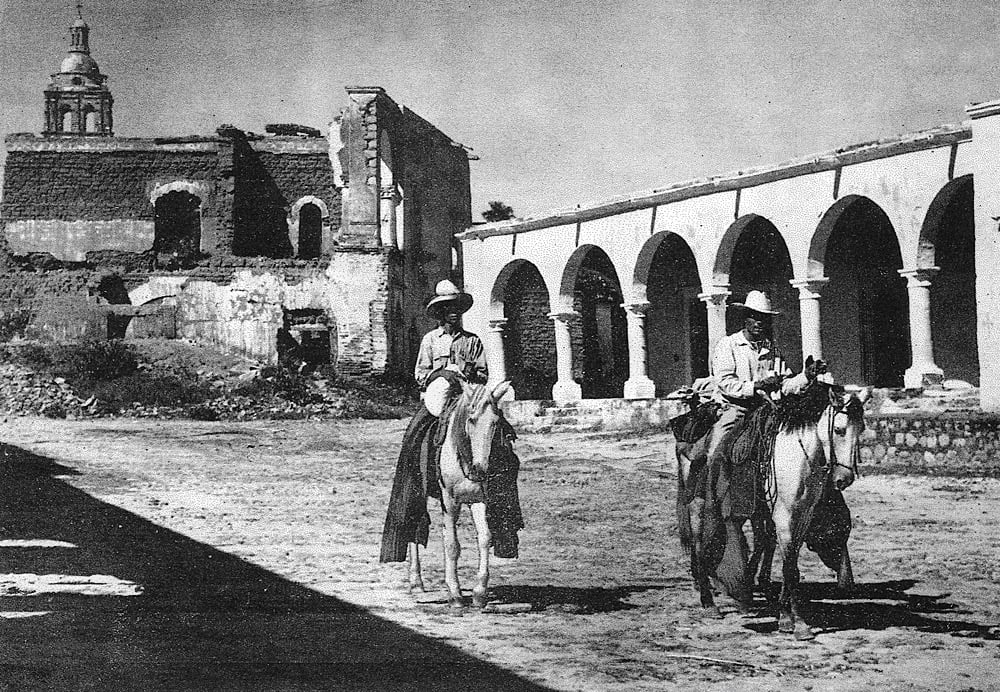
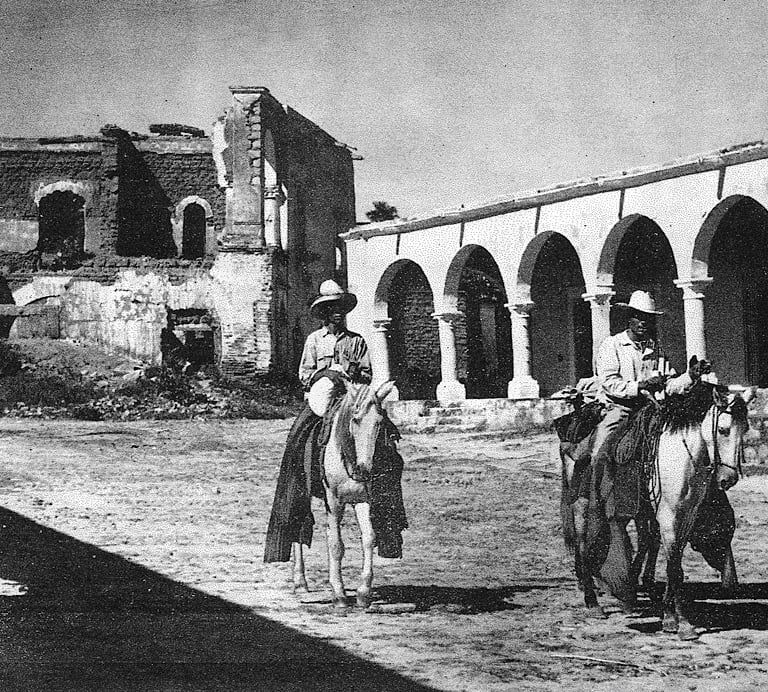
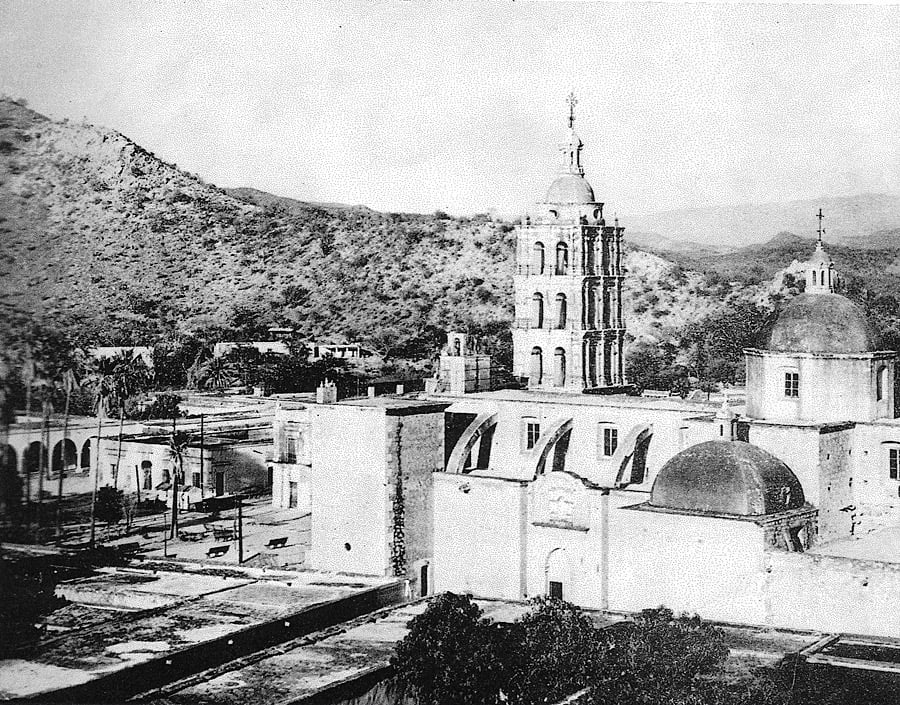
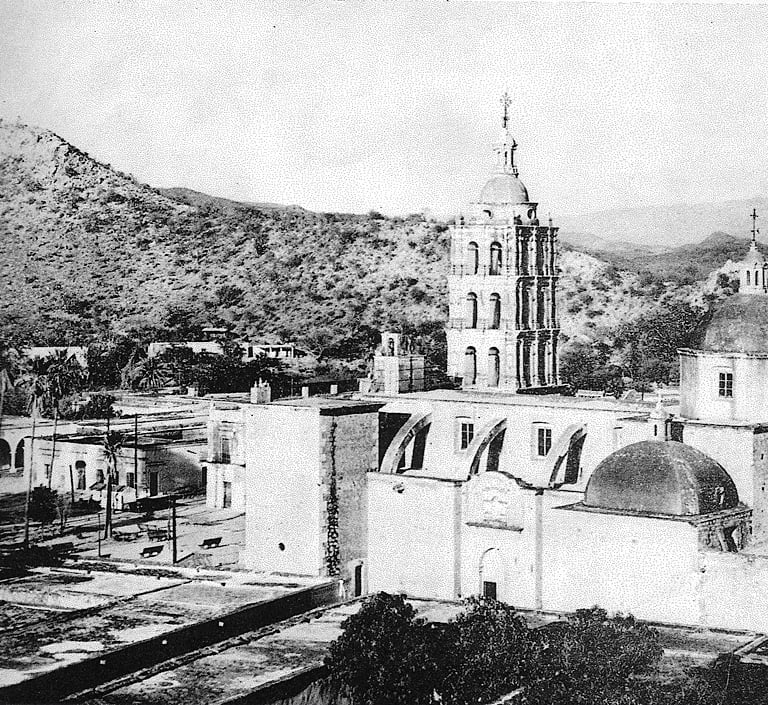
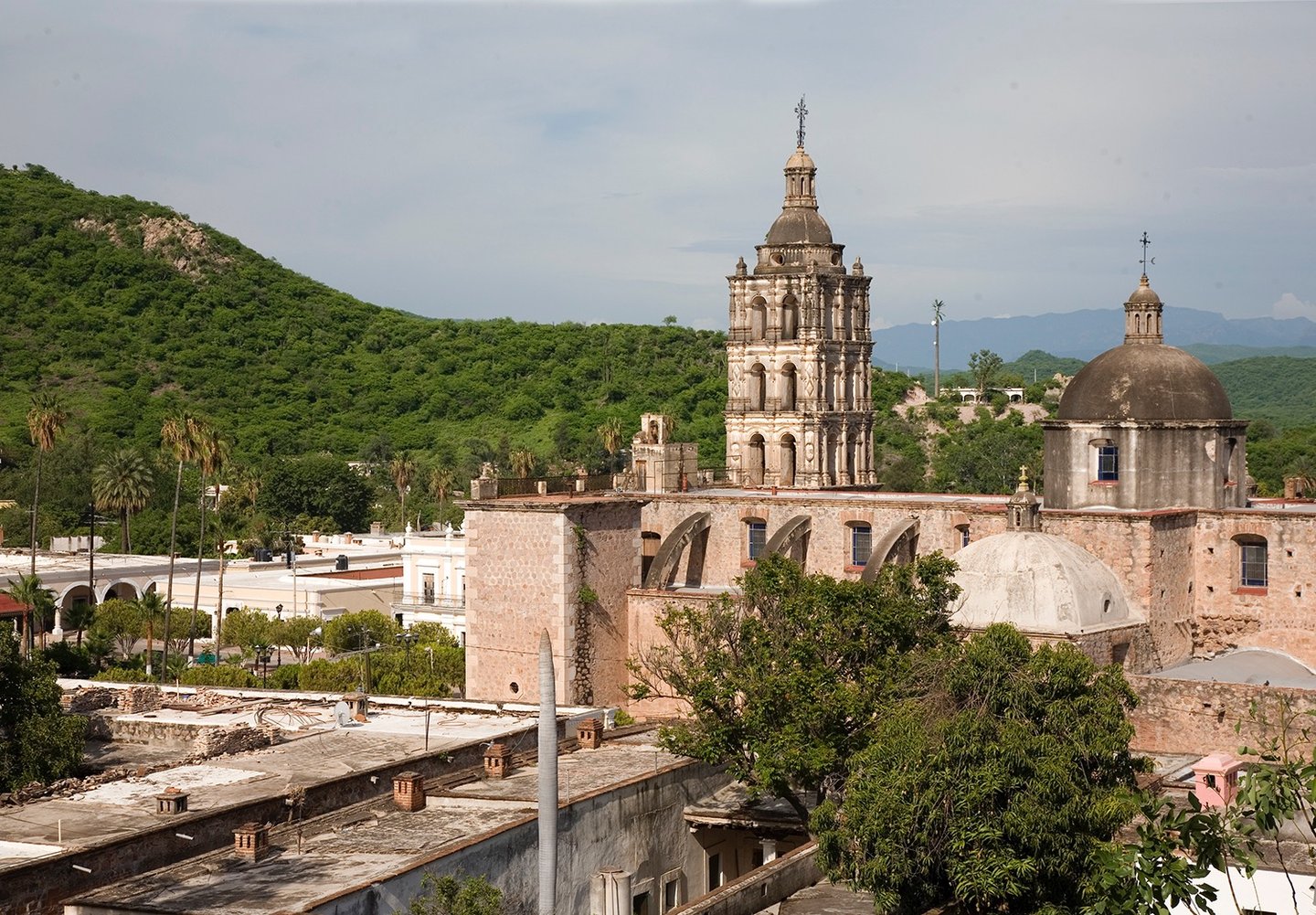
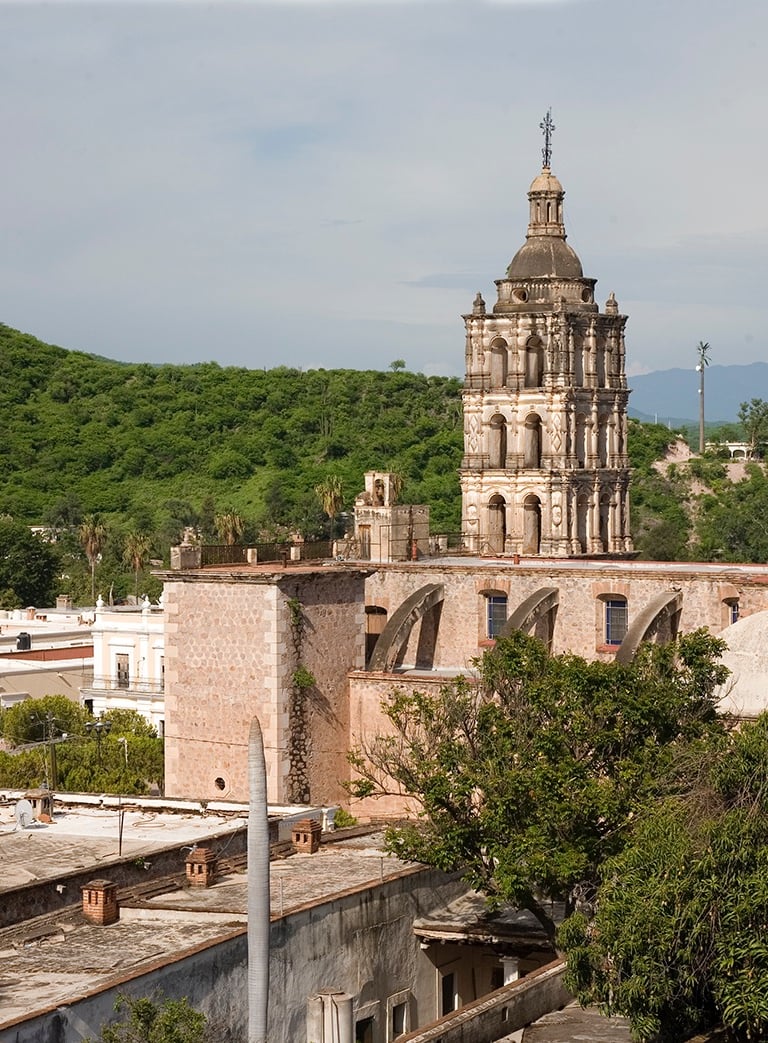
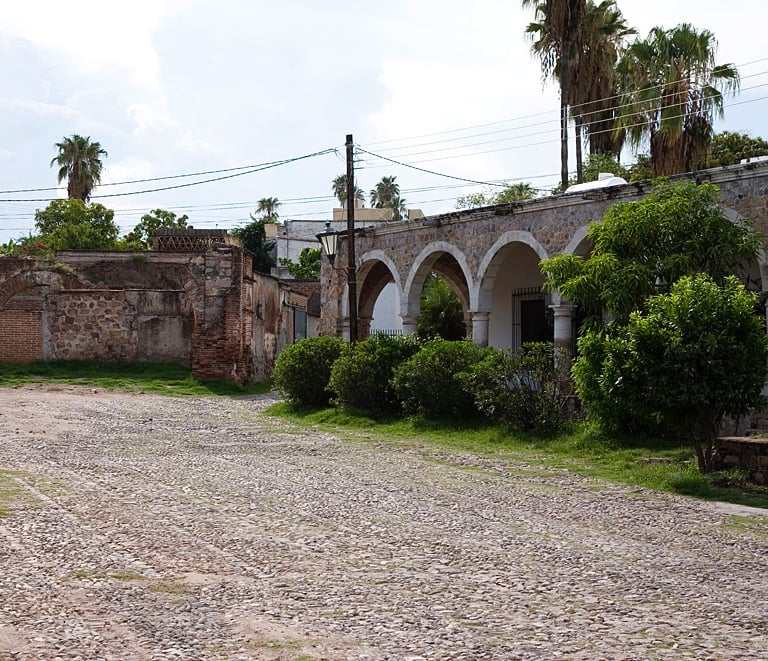
This picture was was probably taken in the 1940s as a post card and reproduced in this publication. The ruins of the governor's mansion, which then had a partial second floor, blocks the view of the church tower. The picture at right is from the same location.
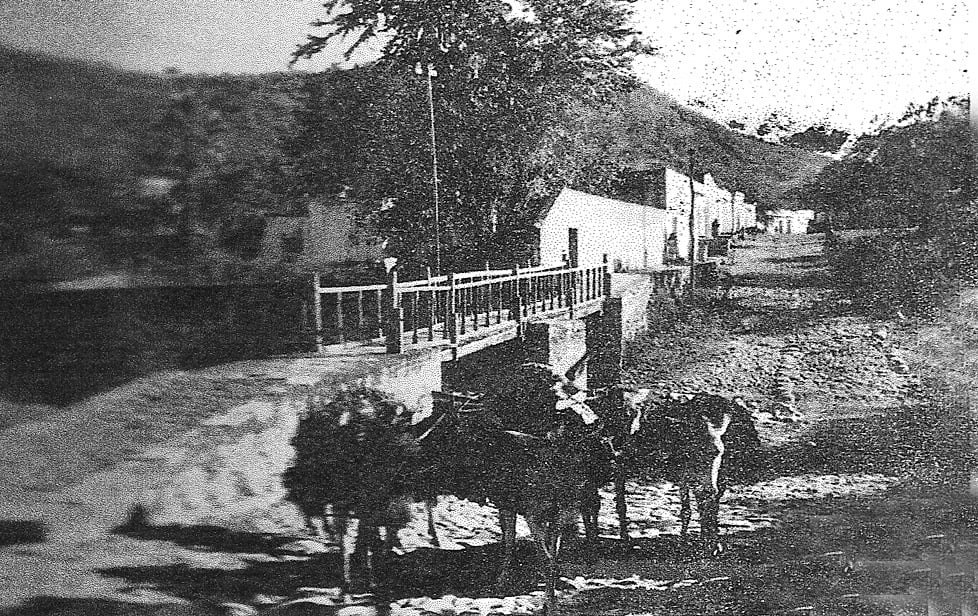
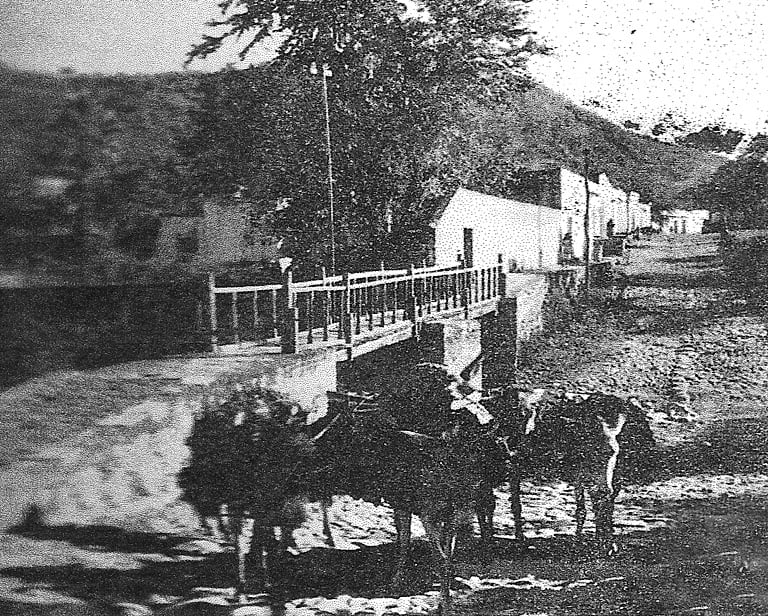
An iconic image from the 1940s, this picture was taken of an arroyo bridge in Tacubaya at what is now the Hacienda de los Santos resort. The bridge in the 2008 view at right was destroyed in the Norbert storm later that year, and it has now been replaced by a new, larger structure.
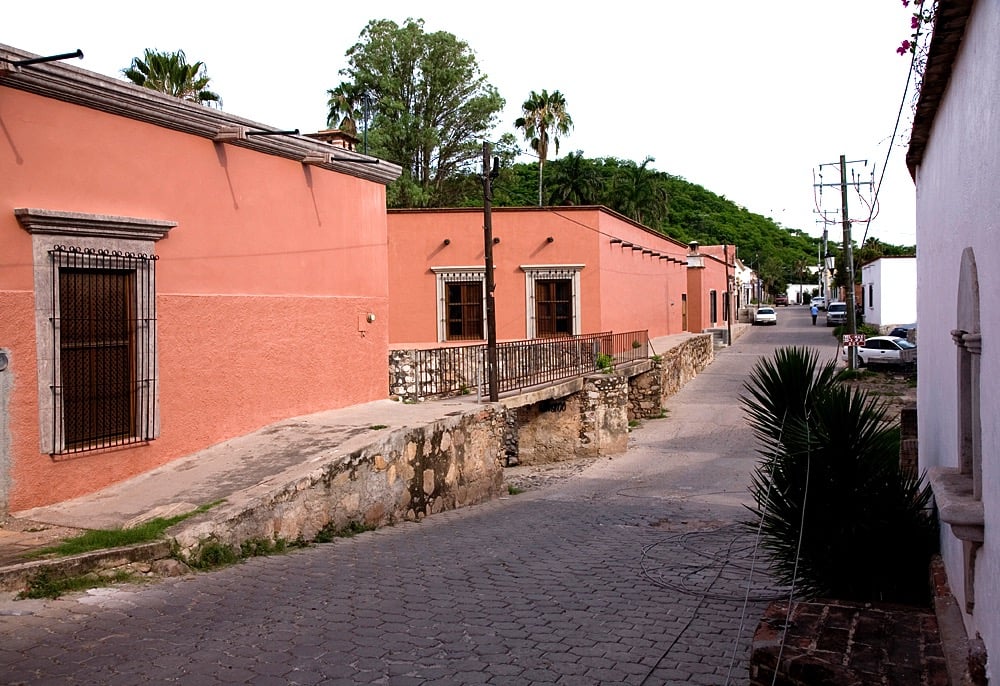
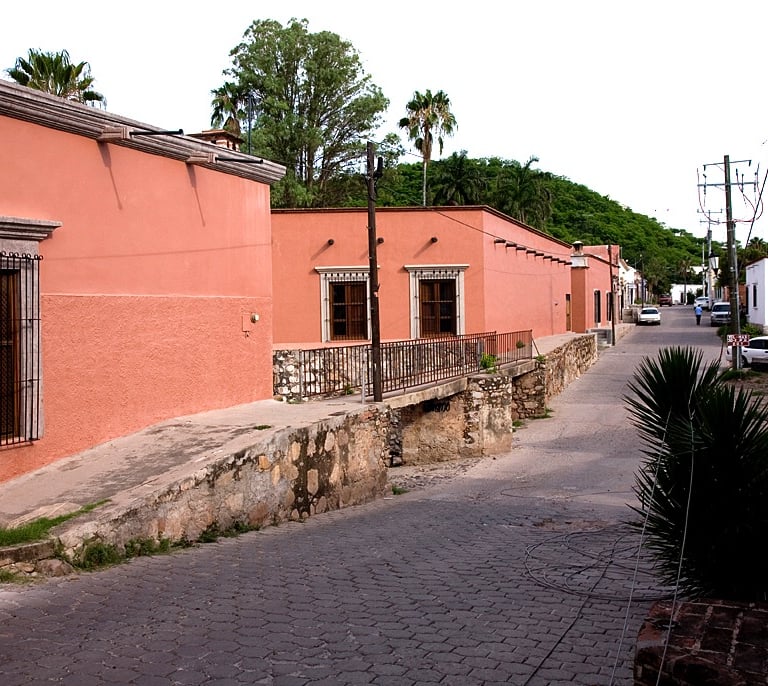
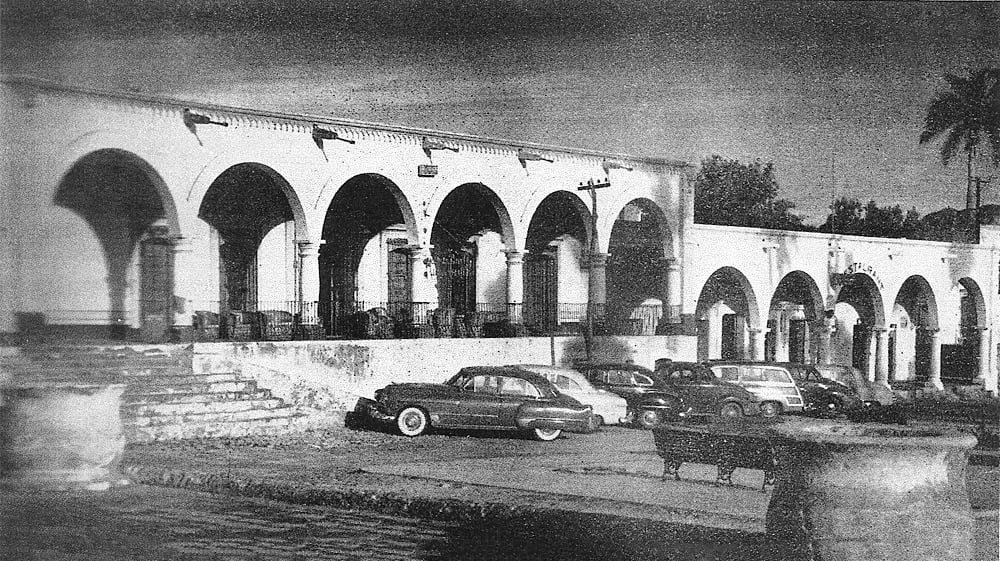
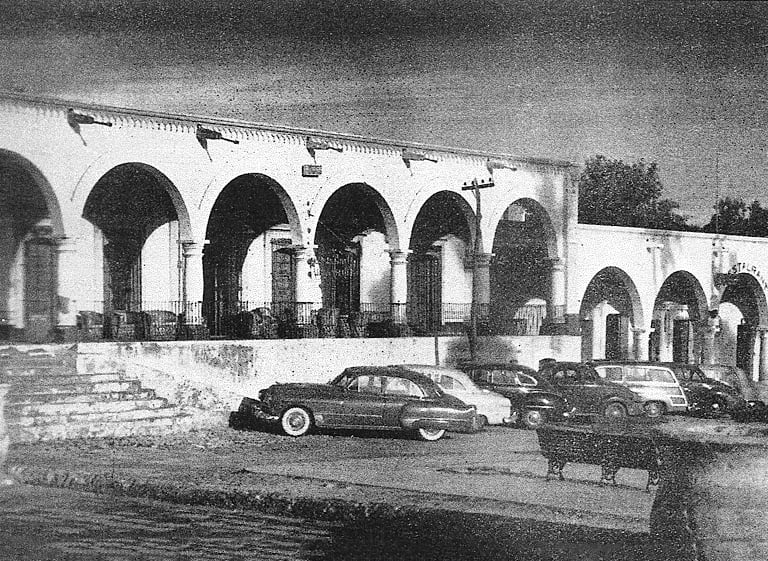
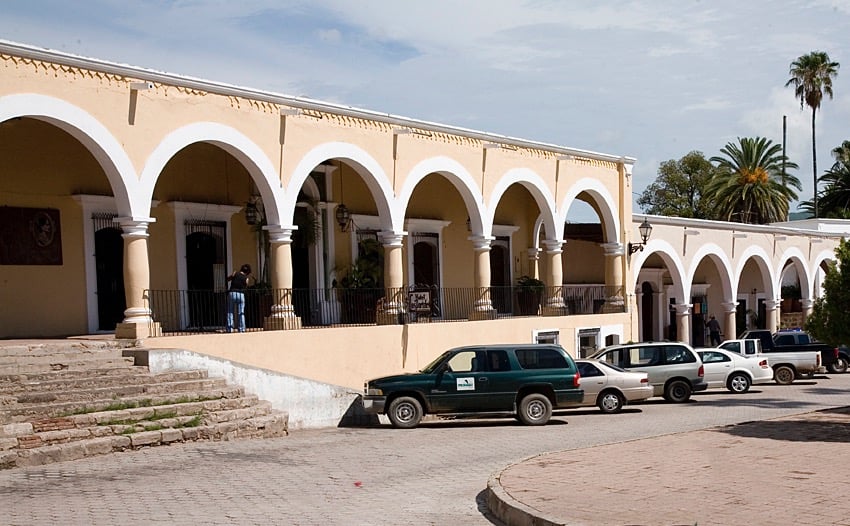
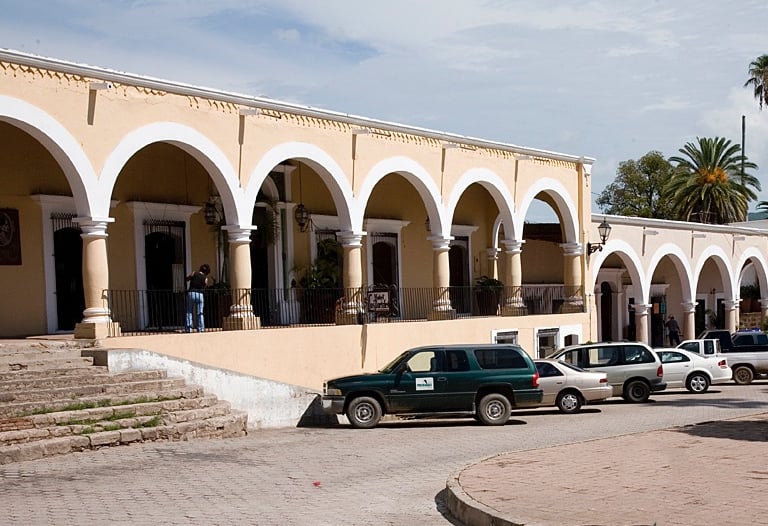
The historic Almada house on the plaza de Armas remains the center landmark of our Pueblo Mágico
________________________
END OF PAGE